The short answer
Laser tattoo removal is generally safe when carried out by a qualified, regulated practitioner using suitable equipment, with a patch test and good aftercare. The main risks — temporary redness, blistering, pigment change and, rarely, scarring or infection — are usually manageable and often avoidable. Safety depends heavily on who treats you. In the UK, regulation differs by nation, so checking a practitioner’s training and registration matters. Suitability varies by individual; a consultation is essential.
‘Is it safe?’ is the right question to ask before any cosmetic procedure. For laser tattoo removal the honest answer is that it is generally safe in the right hands — but the phrase ‘the right hands’ is doing a lot of work. This page explains what actually makes the procedure safe, what the genuine risks are, and the checks that protect you, including the patchwork of UK regulation.
Safety at a glance
- Overall Generally safe in trained hands
- Main risks Blisters, pigment change, rare scarring
- Key safeguard Qualified, regulated practitioner
- Always required Patch test and consultation
- UK regulation Varies by nation
- Suitability Varies by individual
What makes it safe
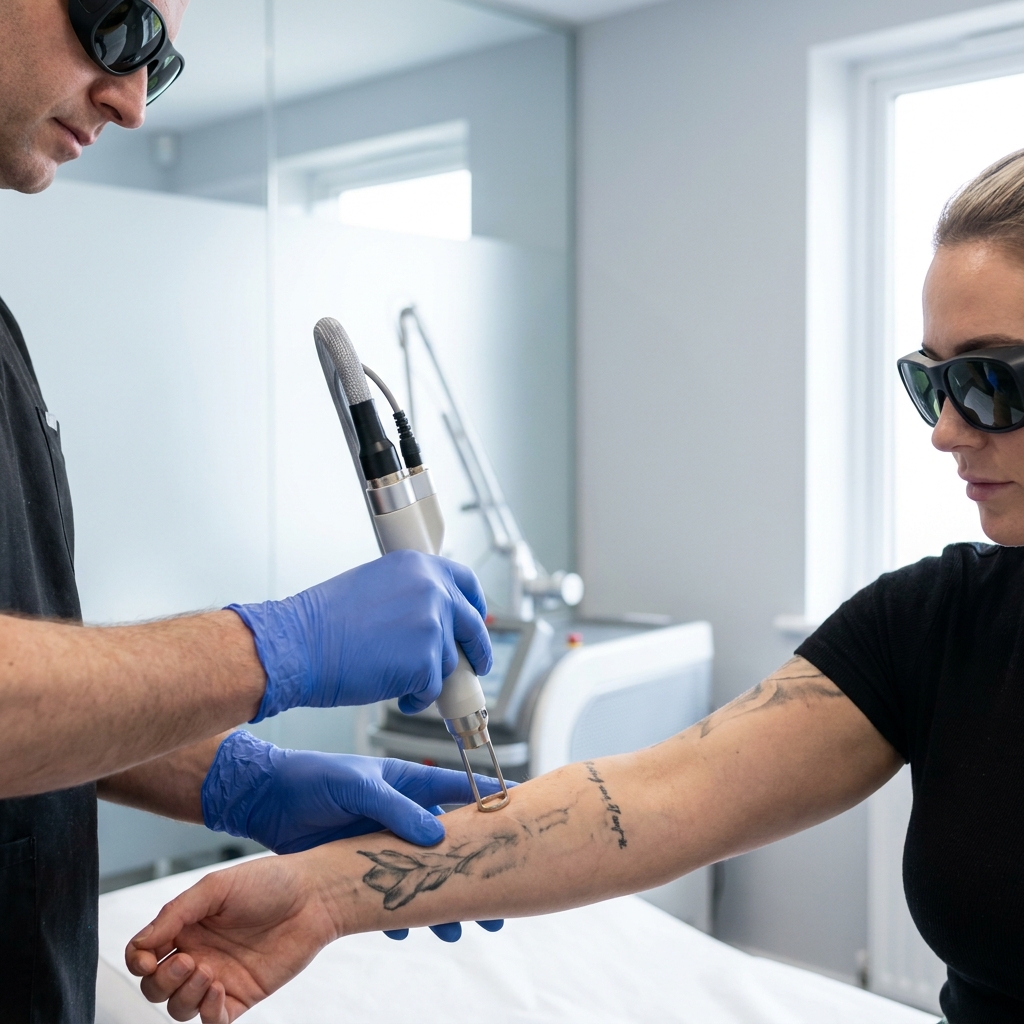
The safety of laser tattoo removal rests on three things: the right technology, a competent operator and proper aftercare. Established Q-switched and picosecond lasers are designed to target ink while sparing the surrounding skin, which is why they are the accepted standard and why they have replaced older, riskier methods. A trained practitioner selects settings appropriate for your skin tone and tattoo, performs a patch test first to see how your skin responds, and can tell the difference between a normal reaction and a warning sign. Diligent aftercare between the 6–8 week sessions then keeps the risk of infection and scarring low. When all three of these are in place, the great majority of people complete a course without any serious problem.
What the genuine risks are
No skin procedure is entirely risk-free, and being clear about this is itself part of safety. The realistic risks are:
- Temporary redness, swelling, blistering and scabbing — common and short-lived.
- Pigment change (lightening or darkening), usually temporary — see skin reactions.
- Scarring — rare, and usually linked to poor technique, infection or aftercare.
- Infection — rare, and largely preventable with clean aftercare.
The fuller picture is in side effects. Importantly, complete removal can never be guaranteed, and a reputable clinic will say so plainly rather than promising a perfect result. Honesty about both risks and likely outcomes is one of the clearest signs of a trustworthy provider.
UK regulation — who oversees it
Regulation is not uniform across the UK, which is exactly why checking your provider matters so much. Depending on where you live and whether the procedure is doctor-led, different bodies apply.
| Nation | Oversight |
|---|---|
| England | Largely unregulated nationally; many local authorities licence ‘special treatments’; CQC where doctor-led |
| Scotland | Healthcare Improvement Scotland (HIS) |
| Wales | Healthcare Inspectorate Wales (HIW) |
| Northern Ireland | RQIA |
The voluntary JCCP register and membership of the BMLA are useful additional signals of competence, alongside proper training, insurance and a clean, professional clinic. See UK regulation for the full detail of how this patchwork works.
How to make it safer for you
Choose a qualified, regulated practitioner, confirm they perform a patch test, disclose your full medical history (including medication, pregnancy, infections and a tendency to scar), follow aftercare carefully, and never rush the spacing between sessions. See questions to ask and is my removalist qualified for the checks worth making. Certain circumstances — such as pregnancy, active skin infection or some medications — may mean treatment is deferred or unsuitable, which is another reason a thorough consultation matters.
Signs of a clinic that takes safety seriously
You can judge a great deal from how a clinic behaves before any laser is switched on. A safety-minded provider will insist on a consultation and a patch test rather than treating you on the spot, will ask about your health and medication, and will explain the realistic number of sessions and the limits of what removal can achieve. They will give you written aftercare, a clean and professional environment, and honest answers about risks rather than glossy promises of guaranteed, instant results. Pressure to pay upfront for a long course before a patch test, vague answers about training or equipment, or claims that removal is completely painless and risk-free are all reasons to look elsewhere. Trusting your instincts here is sensible: the same care a clinic shows in its process tends to be the care it shows with the laser itself. This page is general information, not medical advice; suitability and safety vary by individual, so a consultation and patch test are essential before any treatment.
Frequently asked questions
Is laser tattoo removal safe overall?
Generally yes, when carried out by a qualified, regulated practitioner using suitable equipment, with a patch test and good aftercare. Risks are usually temporary and often avoidable.
Who regulates tattoo removal in the UK?
It varies by nation: HIS in Scotland, HIW in Wales, RQIA in Northern Ireland, and the CQC where doctor-led in England, where many local authorities also licence the treatment.
What is the most important safety check?
Who treats you. Confirm the practitioner’s training, registration and insurance, and that they use appropriate, well-maintained equipment and perform a patch test.
Are there people it isn’t safe for?
Suitability varies. Pregnancy, certain medications, infections or a tendency to scar may mean treatment is deferred or unsuitable. Disclose your full history and consult a practitioner or GP.
Sources & further reading
- NHS — Laser and intense pulsed light (IPL) treatments
- MHRA — Regulation of lasers and IPL devices
- Healthcare Improvement Scotland (HIS) — Independent clinics regulation
- Joint Council for Cosmetic Practitioners (JCCP) — Practitioner register
This guide is general information, not medical advice. A patch test and consultation with a qualified, regulated practitioner are essential before treatment, and results vary by individual. Discuss any skin or health concerns with the practitioner or your GP.