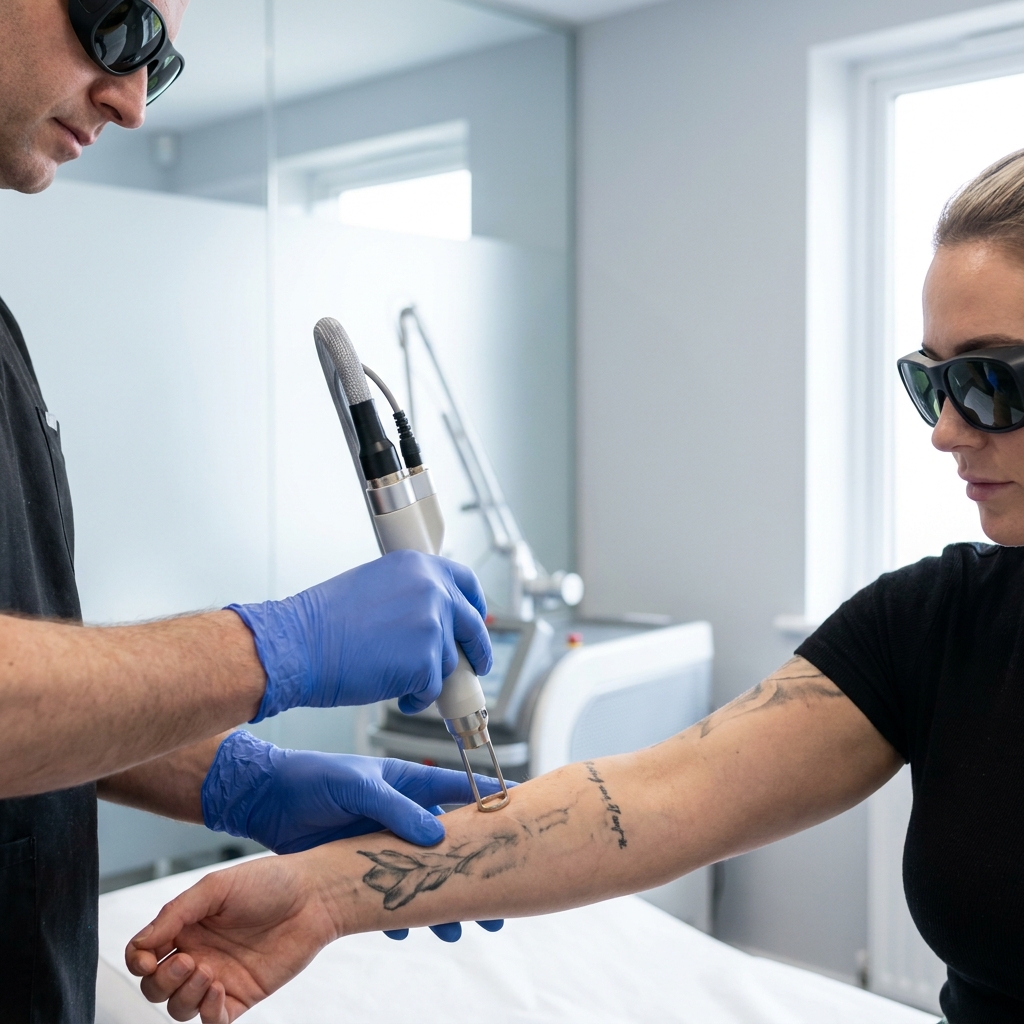
The short answer
Ask about training, regulation, the laser, your plan, the cost and the risks. Good questions include: what laser-specific training do you have, are you on the JCCP register, which laser do you use, will I have a patch test, how many sessions might I need, what does it cost, what are the risks, and what aftercare is involved. Clear, unhurried answers are reassuring; vague or evasive ones are a warning. This is general information, not medical advice, and results vary by individual.
The questions you ask before treatment do more than gather facts — they test how a clinic responds to scrutiny. A confident, competent practitioner will welcome them and answer clearly; one who deflects or rushes you is telling you something. This guide gives you the questions that matter most and explains what a good answer sounds like.
Questions to ask at a glance
- Training What laser qualifications do you hold?
- Regulation Are you JCCP-registered or licensed?
- Equipment Which laser do you use, and why?
- Process Will I have a patch test first?
- Plan How many sessions and how far apart?
- Risks What side effects should I expect?
Questions about training and regulation
Start with who is treating you and whether anyone holds them to a standard. Because cosmetic laser removal is not consistently regulated across the UK, the practitioner’s training and accountability are your first concern. Ask what laser-specific training they have completed, how long they have used this particular machine, and whether they are on the Joint Council for Cosmetic Practitioners (JCCP) voluntary register. Ask which regulator or local licence applies in your area — this varies by nation, as our UK regulation guide explains — and whether they carry professional indemnity insurance for laser work. A good answer is specific and verifiable; a poor one is vague or defensive. See also is my tattoo removalist qualified.
The way these questions are received matters as much as the facts they uncover. A practitioner who answers plainly, offers to show certificates or an insurance document, and points you to their JCCP entry is signalling that they have nothing to hide. One who bristles, changes the subject, or insists that “no one really needs all that” is signalling the opposite. You are not being difficult by asking; you are doing exactly what a careful consumer should do when no regulator has done it for you.
Questions about the laser and the process
The equipment and method matter for both safety and results. Ask which laser they use and why it suits your tattoo — Q-switched and picosecond lasers are the established technologies, and you can read about the difference in picosecond vs nanosecond lasers. Confirm that a patch test will be done before any full course, and ask how they will assess your skin type and adjust the settings accordingly.
- “Which laser do you use, and is it suited to my ink and skin?”
- “Will I have a patch test, and how long before my first session?”
- “How will you assess my skin type and set the laser safely?”
- “What hygiene and safety measures do you follow?”
Questions about your plan and the cost
You deserve an honest picture of the commitment involved. A practitioner should give an informed estimate rather than a guarantee.
| Ask | A reassuring answer sounds like |
|---|---|
| How many sessions? | “Typically 6–12, but it depends on your ink and skin” |
| How far apart? | “Usually 6–8 weeks to let skin recover” |
| What is the cost? | A clear per-session price and an estimated total range |
| Will it fully clear? | “We aim to fade it significantly; complete removal can’t be guaranteed” |
For more detail see how many sessions and tattoo removal cost.
Questions about risks and aftercare
A trustworthy clinic is upfront about what can go wrong and how to look after your skin. Ask what side effects are normal, what is not, and who to contact if you are worried after a session. Expect honest mention of blistering, temporary pigment change and rare scarring, alongside clear aftercare instructions.
How to use the answers
The point of asking is to compare. Take the same questions to two or three clinics and weigh not just the facts but the manner: who explained things most clearly, who insisted on a patch test, who was honest that results vary. The clinic that scores best on transparency and care — rather than the cheapest or the most convenient — is usually the right choice. Bring your written questions to the consultation, and use our guides on choosing and finding a clinic to turn the answers into a confident decision. There is no prize for choosing quickly. The tattoo took an afternoon to apply but will take months to fade, so a week spent asking good questions of two or three clinics is time well spent. The clinic that earns your trust through clear, honest answers is the one most likely to look after your skin when it matters.
Frequently asked questions
What is the single most important question to ask?
Ask what laser-specific training the practitioner holds and whether they are JCCP-registered. Competence and accountability matter more than anything else, because regulation is uneven across the UK.
Should I ask whether removal is guaranteed?
Yes — and the honest answer is no. A good practitioner will say complete removal cannot be guaranteed and will describe a realistic range of outcomes instead.
Is it rude to question a practitioner’s training?
Not at all. A competent practitioner expects and welcomes these questions. Reluctance to answer is itself a warning sign about the clinic.
What should I ask about aftercare?
Ask what reactions are normal, what is not, how to care for the area, and who to contact if you are concerned after a session. Clear aftercare guidance is a mark of a good clinic.
Sources & further reading
- NHS — Laser and IPL treatments and questions to ask
- JCCP — choosing a cosmetic practitioner safely
- MHRA — Regulation of lasers and intense light source devices
- British Medical Laser Association (BMLA) — standards for practitioners
This guide is general information, not medical advice. A patch test and consultation with a qualified, regulated practitioner are essential before treatment, and results vary by individual. Discuss any skin or health concerns with the practitioner or your GP.