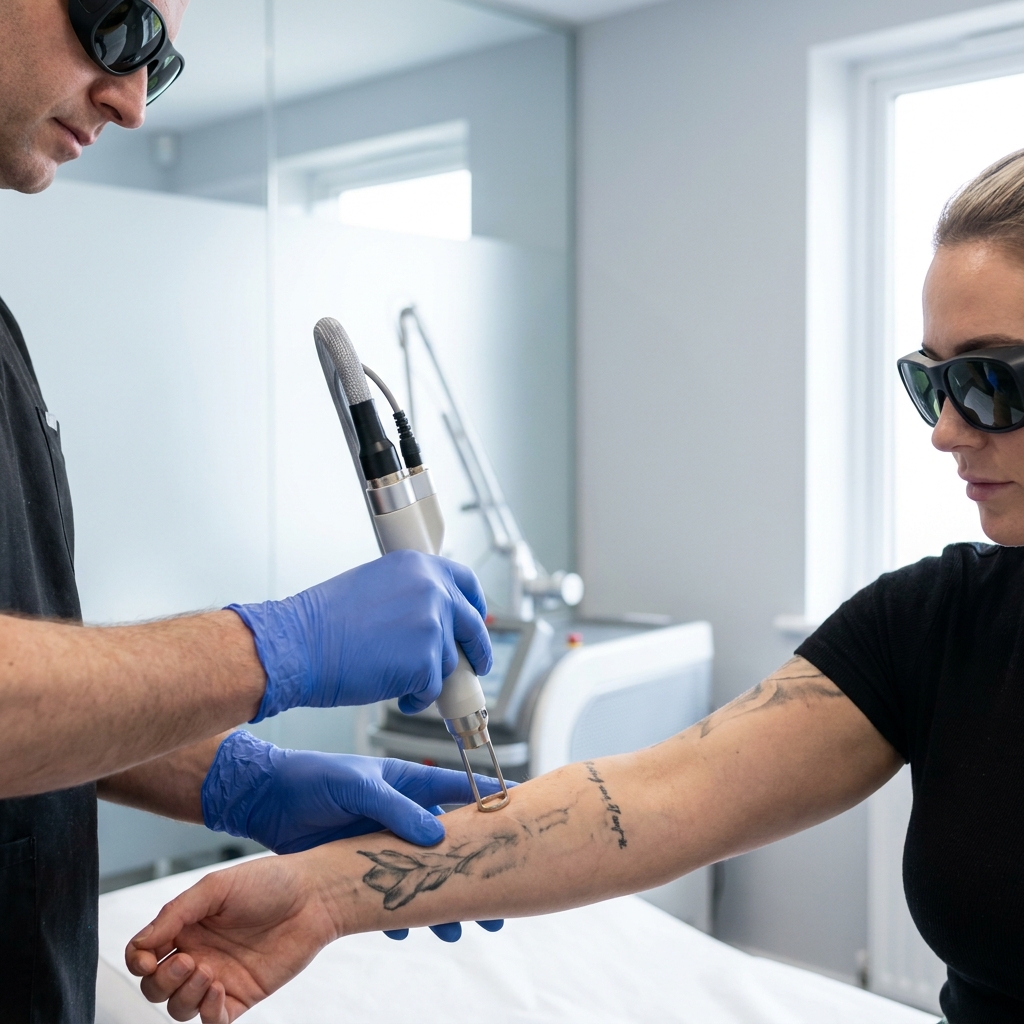
The short answer
To find a good clinic, start with the registers, not the adverts. Search the JCCP voluntary register for practitioners in your area, check whether a clinic holds the relevant regulator registration or local-authority licence, and read independent reviews carefully. Then book a face-to-face consultation and insist on a patch test before any treatment. Verify training, insurance and the laser used. Never book a block course before you have met the practitioner. Results vary, and this is general information, not medical advice.
Knowing what makes a good clinic is one thing; actually finding one near you is another. This guide turns the checklist into action — where to search, how to verify what you find, and the order in which to do it — so you book with confidence rather than convenience.
Finding a clinic at a glance
- Start with The JCCP register, not adverts
- Verify Regulator or local-authority licence
- Always book A face-to-face consultation
- Insist on A patch test before treatment
- Check Insurance and the laser used
- Avoid Paying for a block course upfront
Where to start your search
The safest starting point is a register rather than a search engine’s top advert. The Joint Council for Cosmetic Practitioners (JCCP) maintains a voluntary public register of practitioners who have met defined standards; searching it for your area gives you a shortlist that already filters out the least accountable operators. From there, look at the clinic’s own information: does it name the practitioner, state their training, and describe its consultation and patch-test process clearly? Independent reviews can be useful, but treat glowing one-line testimonials with caution and look instead for detailed accounts of consultations, aftercare and how the clinic handled any problems. Reading how to choose a tattoo removal clinic first will sharpen what you are looking for.
Verify before you book
A name on a website proves nothing on its own, so verify each shortlisted clinic. Confirm which regulator it answers to for your nation — Healthcare Improvement Scotland, Healthcare Inspectorate Wales, the RQIA in Northern Ireland, or local-authority special-treatment licensing and, where doctor-led, the CQC in England. Ask whether the practitioner is on the JCCP register, what laser training they hold, and whether they carry professional indemnity insurance for laser work. Our page on UK regulation explains who oversees what, and is my tattoo removalist qualified sets out exactly how to check training.
| Step | What to do | What you are confirming |
|---|---|---|
| 1. Search | Use the JCCP register for your area | Practitioner meets defined standards |
| 2. Verify regulation | Ask which regulator or licence applies | The clinic is accountable |
| 3. Check insurance | Confirm laser-specific indemnity cover | You are protected if harm occurs |
| 4. Book consultation | Arrange a face-to-face assessment | Your suitability is assessed |
| 5. Patch test | Insist on one before full treatment | Your skin reaction is tested |
What to confirm at the consultation
The consultation is where a clinic earns your trust. A good practitioner will examine your tattoo and skin, ask about your medical history and medications, explain the likely number of sessions and the cost honestly, and set realistic expectations rather than promising a clean result. They should describe the laser they use, the aftercare you will need, and the small but real risks. Bring questions — our list in questions to ask before tattoo removal is a good prompt — and notice whether the answers are clear and unhurried.
- Suitability — is laser removal appropriate for your skin and tattoo?
- Plan — an honest estimate of sessions, spacing and cost.
- Process — confirmation that a patch test comes first.
- Aftercare — clear instructions and a point of contact.
Red flags when searching
Some signals should stop you booking. Be wary of clinics that push a large upfront block-booking before you have met the practitioner, that cannot or will not tell you which laser they use, that skip the patch test, or that advertise guaranteed complete removal. A practitioner who is reluctant to discuss training, insurance or side effects is not one to treat your skin. Convenience and price are tempting, but they are the wrong basis for a decision that affects your skin for life.
Putting it all together
Finding the right clinic is a short process done in the right order: search the register, verify regulation and insurance, book a consultation, insist on a patch test, and only then commit. Compare two or three clinics on how thoroughly they assess you rather than on headline price. A clinic that is registered, insured, transparent about training and honest about results is worth travelling a little further for. Take your time — tattoos took time to apply, and safe removal is a course over months, not a rushed decision in an afternoon.
Frequently asked questions
Where is the best place to look for a tattoo removal clinic?
Start with the JCCP voluntary register to find practitioners who meet defined standards in your area, then verify each one’s regulation, training and insurance before booking a consultation.
Should I book a course before meeting the practitioner?
No. Always have a face-to-face consultation and a patch test first. Avoid clinics that demand payment for a block of sessions before assessing you.
Does the clinic need to be registered with a regulator?
It depends on your UK nation and who performs the procedure. Independent clinics are registered with HIS in Scotland, HIW in Wales and the RQIA in Northern Ireland; in England local-authority licensing or the CQC may apply.
How many clinics should I compare?
Comparing two or three consultations is sensible. Judge them on how thoroughly they assess your skin and tattoo, whether they insist on a patch test, and how honest they are about likely results, not just on price.
Sources & further reading
- JCCP — Joint Council for Cosmetic Practitioners voluntary register
- NHS — Laser and IPL treatments and cosmetic procedures
- MHRA — Regulation of lasers and intense light source devices
- Chartered Institute of Environmental Health (CIEH) — special treatment licensing guidance
This guide is general information, not medical advice. A patch test and consultation with a qualified, regulated practitioner are essential before treatment, and results vary by individual. Discuss any skin or health concerns with the practitioner or your GP.