The short answer
Keep the area clean, covered and moisturised, leave blisters and scabs alone, and protect it from the sun. Gently wash with mild soap and water, pat dry, apply any recommended ointment and a non-stick dressing for the first days. Avoid swimming, saunas, heavy exercise and sun exposure while healing. Do not pick or scratch. Sessions are spaced 6–8 weeks apart so skin fully recovers. Follow your clinic’s written instructions, as advice varies by individual.
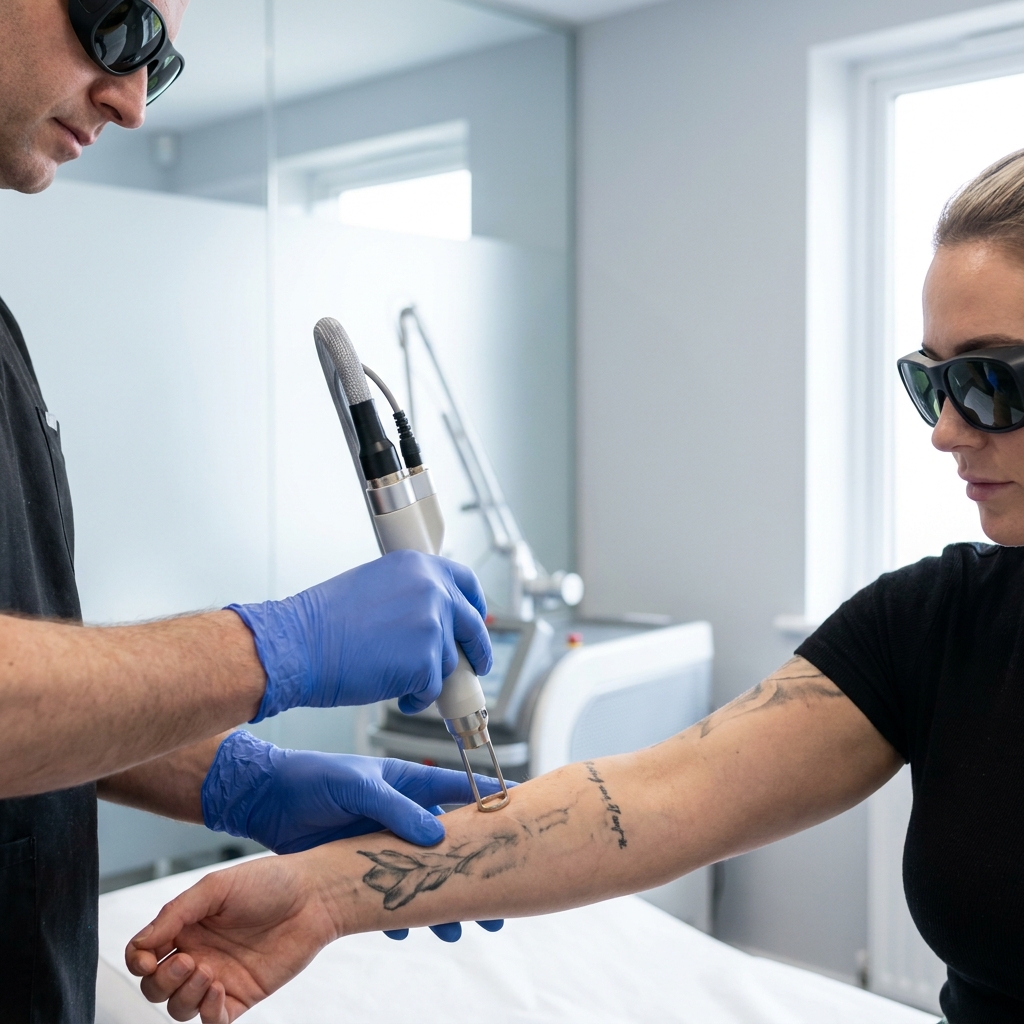
Good aftercare is the part of tattoo removal you control, and it makes a real difference to how smoothly you heal and how well the ink clears. The laser does the work in the clinic; the weeks between sessions are where careful skin care prevents infection, reduces the chance of scarring and protects your final result. Here is a clear, practical routine.
Aftercare at a glance
- Clean with Mild soap and lukewarm water
- Cover for First few days, as advised
- Avoid Sun, swimming, saunas, picking
- Blisters Leave intact, do not pop
- Moisturise Once any dressing is off
- Between sessions 6–8 weeks to fully heal
The first 48 hours
Immediately after treatment the area will be red, warm and possibly swollen, and may feel similar to mild sunburn. Apply a cool compress for short periods to ease the heat, and keep any dressing your clinic applied in place for as long as instructed. Once you are advised to, gently clean the area with mild soap and lukewarm water, pat — never rub — it dry with a clean towel, and apply a thin layer of any recommended ointment. Re-cover with a non-stick sterile dressing for the first few days, especially if the area might rub against clothing. Try to rest the treated area where you can, and avoid knocking or scratching it even though it may feel itchy.
- Wash gently twice a day with mild, fragrance-free soap.
- Pat dry; do not scrub or rub.
- Apply recommended ointment thinly.
- Keep covered while it weeps or blisters.
- Avoid tight clothing or jewellery over the area.
Healing over the following weeks
Over the next one to two weeks you may see blisters, scabs and flaking as the skin repairs and the body gradually clears the shattered pigment. This is entirely normal — see the full healing time guide for the week-by-week picture. The single most important rule is to leave it alone: do not pick scabs, pop blisters or scratch, as this is the main avoidable cause of infection and scarring. Itching is common as skin heals, but a gentle dab of moisturiser once the area has closed over is far safer than scratching. Keep the skin moisturised to support healing once any dressing is off and the surface has sealed.
| Do | Avoid |
|---|---|
| Clean gently, keep dry | Picking scabs or blisters |
| Moisturise once healed | Sun, sunbeds, tanning |
| Wear loose clothing | Swimming, saunas, hot tubs |
| Rest the area | Heavy exercise that causes sweating or friction |
Protect the area — especially from the sun
Healing skin and recently treated areas are vulnerable to ultraviolet light, which raises the risk of pigment changes such as lightening or darkening. Keep the area out of the sun, cover it with clothing where possible, and once healed use a high-factor sunscreen on it whenever it is exposed. Avoid sunbeds entirely throughout your course. Sun protection also matters before your next session, because tanned or sunburnt skin is usually not safe to treat and may mean your appointment is postponed until the tan fades. Looking after the area between sessions therefore protects both your skin and the momentum of your course.
What to avoid while healing
Until the skin has fully recovered, avoid swimming pools, the sea, saunas, steam rooms and hot tubs, which can introduce bacteria; skip heavy exercise that causes sweating or friction over the area; and do not apply perfumed products, exfoliants, fake tan or makeup directly to it. Alcohol and smoking can slow healing, so moderating both around your sessions may help.
Looking after the area between sessions
Aftercare does not stop once the visible scab has gone. In the weeks between appointments — the body is still clearing shattered ink during this time — keep the area moisturised, well protected from the sun, and free from harsh treatments. Good general health supports healthy skin, so staying hydrated, eating well and resting all play a quiet part in how well you recover and how the tattoo fades. When you arrive for your next session, the skin should be fully healed, untanned and unbroken; if it is not, your practitioner may delay treatment to keep you safe. Treating the gap between sessions as part of the process, rather than a pause from it, gives you the best result and the smoothest healing. This page is general information, not medical advice. Always follow the specific written aftercare your clinic provides and ask them about anything you are unsure of, as advice is tailored to your skin, the treated area and your tattoo.
Frequently asked questions
Can I shower after tattoo removal?
Yes, but keep the area out of direct strong jets, wash gently with mild soap and lukewarm water, and pat dry. Avoid soaking, swimming, saunas and hot tubs until fully healed.
Should I pop blisters after treatment?
No. Leave blisters intact and let them heal naturally. Popping or picking removes the skin’s natural barrier and raises the risk of infection and scarring.
How long until I can exercise?
Avoid heavy exercise that causes sweating or friction over the treated area for the first few days, or as your clinic advises, to reduce irritation and infection risk.
When can I expose the area to the sun?
Keep it covered while healing and protected with high-factor sunscreen once healed. Sun exposure increases the risk of pigment changes and can delay your next session.
Sources & further reading
- NHS — Laser and intense pulsed light (IPL) treatments
- NHS — Sunscreen and sun safety
- NHS — How to treat a skin wound and prevent infection
- British Medical Laser Association (BMLA) — Aftercare guidance
This guide is general information, not medical advice. A patch test and consultation with a qualified, regulated practitioner are essential before treatment, and results vary by individual. Discuss any skin or health concerns with the practitioner or your GP.