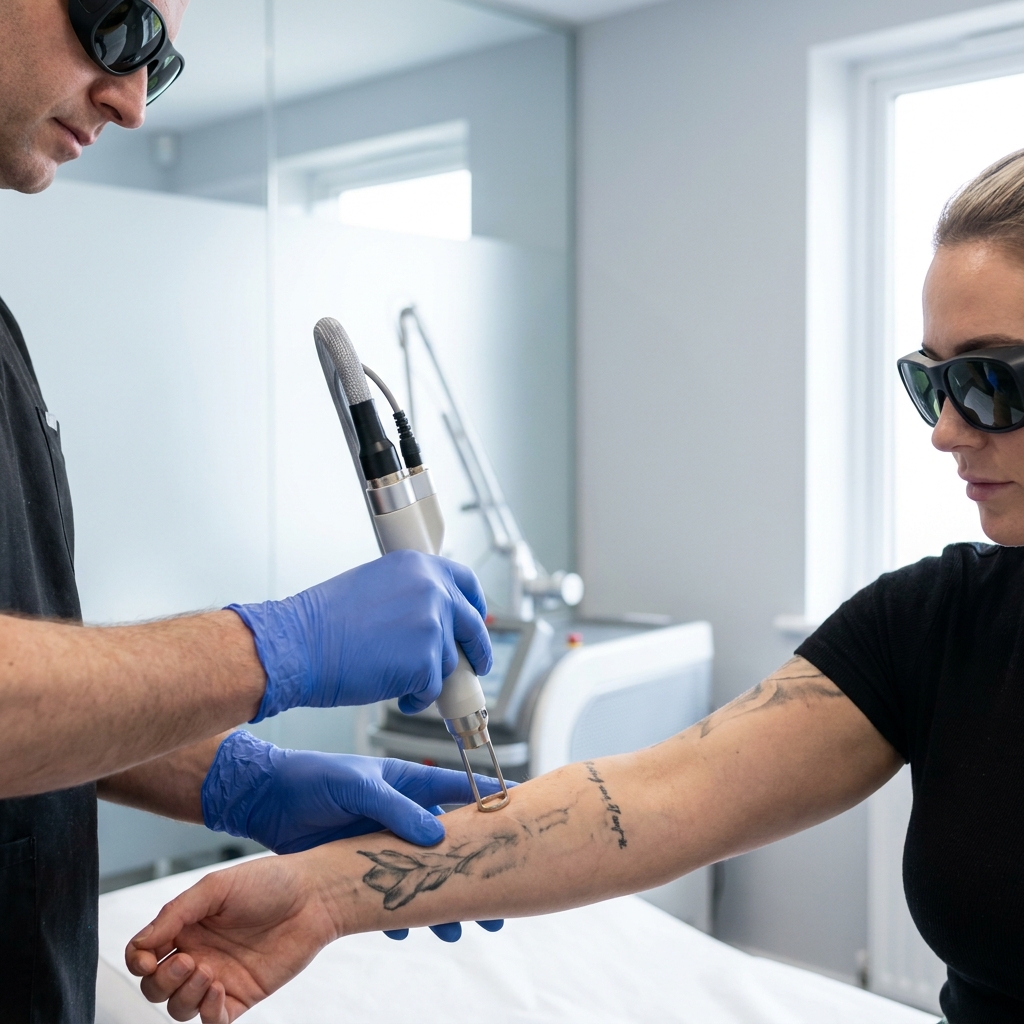
The short answer
Most laser tattoo removal side effects are temporary: redness, swelling, blistering, scabbing, pinpoint bleeding and short-lived frosting. Less common effects include temporary pigment change (lightening or darkening of the skin), and — rarely — scarring or infection, usually linked to poor aftercare or unsuitable settings. Most reactions settle within one to two weeks. Good aftercare, correct laser settings and a patch test reduce the risk. Reactions vary by skin type and tattoo.
Every effective laser treatment produces some reaction in the skin — that is a sign the energy is working. The key is knowing which effects are normal and self-limiting, which need monitoring, and which warrant a call to your practitioner or GP. This page sets out the realistic UK picture so you can recognise normal healing and act sensibly if something looks wrong.
Side effects at a glance
- Most common Redness and swelling
- Also common Blisters, scabs, frosting
- Less common Pigment lightening or darkening
- Rare Scarring, infection
- Usual recovery 1–2 weeks per session
- Main risk factor Poor aftercare or wrong settings
Common, expected reactions
Immediately after a session the treated skin usually looks red, raised and slightly swollen, much like mild sunburn. You may see frosting (a temporary white discolouration), pinpoint bleeding, or small blisters forming over the following hours. Scabbing and flaking then develop as the area heals over the next several days. These are all normal parts of the process and typically resolve within one to two weeks. None of them means something has gone wrong — in fact, a visible reaction is a sign the laser energy has been absorbed and the ink is being broken down. Keeping the area clean, covered and moisturised as advised lets it settle without complication.
- Redness and swelling — usually fades within hours to a few days.
- Blistering and scabbing — common; let them heal naturally and never pick.
- Frosting — immediate whitening that disappears within minutes.
- Pinpoint bleeding and bruising — minor and short-lived.
- Itching and tightness — common as the skin heals; resist scratching.
Pigment and texture changes
Some people experience temporary changes in skin colour. Hypopigmentation (lightening) and hyperpigmentation (darkening) can occur as the skin recovers, and are more likely to be noticeable on richer skin tones — one reason settings must be tailored and conservative, as covered in removal on different skin tones. These changes usually fade over weeks to months but can occasionally persist for longer. Sun exposure makes pigment changes more likely, which is why protecting the area is such an important part of aftercare. Rarely, the skin texture changes or a scar forms; this is uncommon with correct technique and good aftercare. See scarring and skin reactions for the detail on each.
| Effect | How common | Typical course |
|---|---|---|
| Redness, swelling | Almost always | Hours to days |
| Blisters, scabs | Common | 1–2 weeks |
| Pigment change | Less common | Weeks to months |
| Scarring | Rare | Can be lasting |
| Infection | Rare | Needs treatment |
When to seek advice
Most reactions need nothing more than patience and gentle care, and will settle on their own within the expected window. However, you should contact your practitioner, a pharmacist or your GP if you notice signs of infection — spreading redness, increasing pain, heat, pus or a fever — or if a blister is unusually large, or a reaction is not settling as expected. Acting early is sensible and never an overreaction; an infection caught promptly is easily managed, whereas one left alone is the most common route to a lasting mark.
How to lower the risk
Side effects are reduced by treatment from a qualified, regulated practitioner using correctly calibrated equipment, a mandatory patch test beforehand, and diligent aftercare between the 6–8 week sessions. Avoid sun exposure on the treated area, do not pick scabs or pop blisters, and follow your clinic’s written instructions to the letter. Disclosing your full medical history — including medication, a tendency to scar, and any skin conditions — lets your practitioner tailor the treatment to you.
Why some people react more than others
The same laser, on the same settings, can produce noticeably different reactions in two people, and that is entirely expected. Skin tone and type play a large part, as does the area of the body being treated, the density and depth of the ink, and how well you look after the skin afterwards. The colour of the ink matters too: black ink absorbs laser energy efficiently and tends to react predictably, while some colours are harder to treat and may need more sessions, with each pass producing its own reaction. Your age, general health, whether you smoke, and how much sun the area normally gets all influence how readily your skin recovers. None of this changes the basic message — most reactions are temporary and manageable — but it does explain why your experience may differ from a friend’s. This page is general information, not medical advice; reactions vary by individual, so discuss your skin and any medical history at a consultation before starting a course.
Frequently asked questions
Are tattoo removal side effects permanent?
Most are temporary and settle within one to two weeks. Pigment changes can take weeks or months to fade. Scarring is rare and the only commonly lasting effect, usually linked to poor aftercare or unsuitable settings.
Is blistering a bad sign?
No. Blistering is a common, expected reaction. Leave blisters intact, keep the area clean, and let them heal naturally without picking to avoid infection or scarring.
Can side effects be worse on darker skin?
Pigment changes such as lightening can be more noticeable on richer skin tones, which is why a patch test and tailored, conservative settings are essential for safe treatment.
How do I know if it is infected?
Spreading redness, increasing pain, warmth, pus or fever suggest infection. Contact a pharmacist, your GP or NHS 111 promptly rather than waiting.
Sources & further reading
- NHS — Laser and intense pulsed light (IPL) treatments
- NHS — Cosmetic procedures: what to consider
- NHS — Skin infections and when to get medical help
- MHRA — Regulation of cosmetic laser devices
This guide is general information, not medical advice. A patch test and consultation with a qualified, regulated practitioner are essential before treatment, and results vary by individual. Discuss any skin or health concerns with the practitioner or your GP.