The short answer
Yes, laser tattoo removal is uncomfortable, but it is brief and most people tolerate it well. The sensation is often described as a hot elastic band snapping against the skin, or like flecks of hot fat. Each pulse lasts a fraction of a second and a small tattoo can be treated in minutes. Cooling devices, a measured pace and, where a practitioner agrees, numbing cream all reduce the discomfort. Pain varies by body area, ink density and your own tolerance.
Pain is the single most common worry people raise before booking. The honest answer is that laser removal does sting — but the discomfort is short-lived, controllable and rarely the reason people stop a course. This page explains what the sensation actually feels like, why the laser causes it, where it hurts most, and the practical steps a qualified practitioner uses to keep you comfortable.
Pain at a glance
- Typical sensation Hot elastic-band snap
- Duration per pulse A fraction of a second
- Most sensitive areas Ankles, ribs, fingers, neck
- Pain relief Cooling, slower pace, numbing cream
- Worst phase First few seconds, then it settles
- Lasts after Minutes to an hour of heat
What the sensation actually feels like
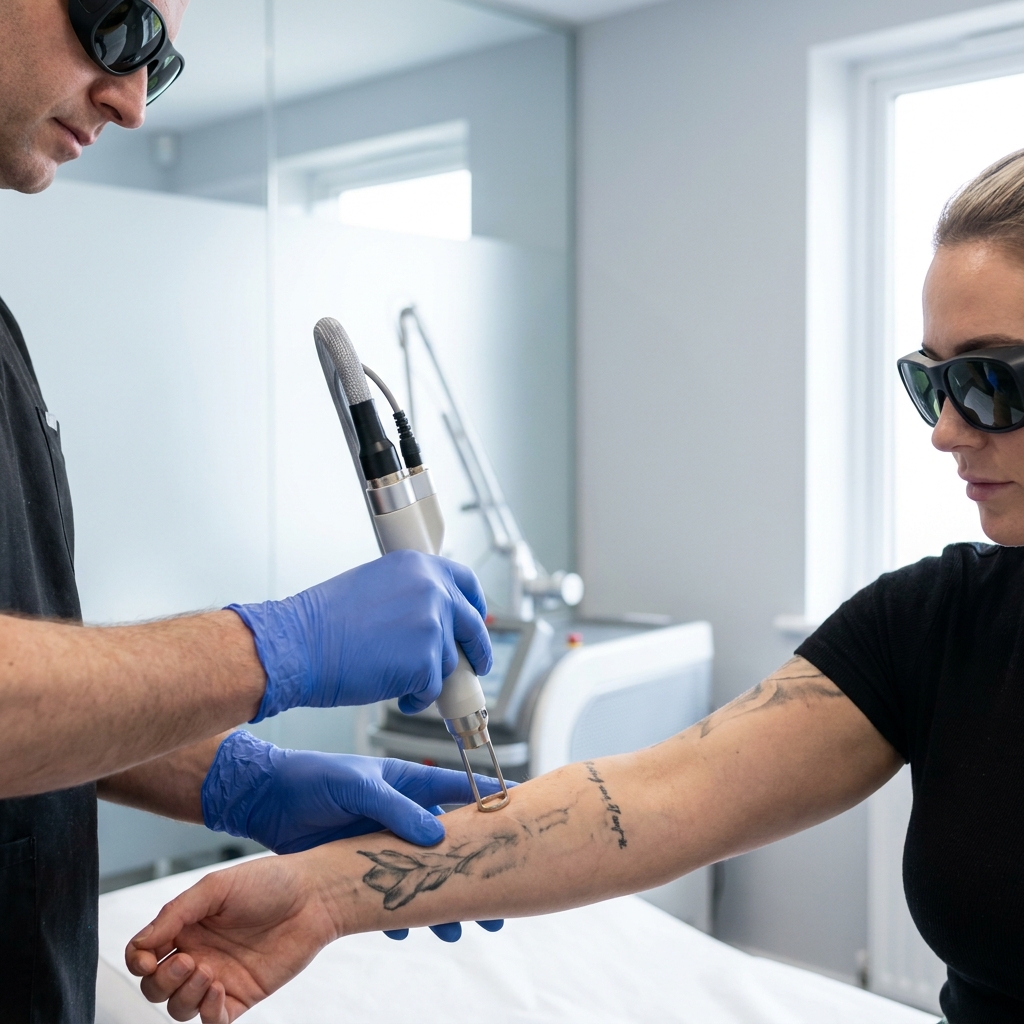
Most people describe laser tattoo removal as similar to a hot elastic band being snapped repeatedly against the skin, or like tiny specks of hot fat landing on you. It is generally sharper and hotter than getting the tattoo in the first place, but it is also far quicker: each laser pulse lasts only a fraction of a second, and the device moves across the design steadily rather than dwelling in one spot. A small tattoo may be finished in a couple of minutes, so even though each pulse stings, the total time spent in discomfort is short. Many people find the anticipation worse than the reality, and that the second session feels more predictable than the first now that they know exactly what to expect from it.
You may also notice an immediate whitening of the skin, called frosting, as the laser reacts with the ink. This is normal, expected and short-lived, and a trained practitioner will recognise it as a sign the energy is being absorbed correctly. There is no single ‘right’ way the sensation should feel, and it can differ between a dense black tattoo and a faded one, or between an old design and a fresh piece. Understanding how lasers break down ink helps explain why the heat is felt as a sharp snap rather than a dull ache, and why some areas of the same tattoo can feel more intense than others.
Why the laser causes pain
The discomfort comes from energy, not from cutting. A Q-switched or picosecond laser delivers very short, very high-intensity bursts of light that are absorbed by the tattoo pigment. That energy shatters the ink into smaller particles and, in doing so, produces a brief spike of heat and a tiny shockwave in the skin. Nerve endings register this as a sharp, hot snap. Because the pulse is so short, the surrounding skin has little time to heat up, which is part of why modern lasers can be effective without causing the lasting burn that older, cruder methods risked. The skill of the practitioner lies in choosing energy settings high enough to break down the ink but no higher than necessary, which keeps both discomfort and the risk of side effects under control.
Where it hurts most
Pain is not the same across the body. Areas with thin skin, less underlying fat and bone close to the surface tend to be more sensitive, while fleshier, well-padded areas are usually more comfortable.
| More sensitive | More comfortable |
|---|---|
| Ankles and feet | Outer upper arm |
| Ribs and sternum | Thigh |
| Fingers, wrists, hands | Back and shoulder |
| Neck, collarbone, elbow | Calf |
Larger and denser tattoos take longer to treat, so the cumulative discomfort is greater simply because more pulses are needed to cover the whole design. Your own pain threshold matters too, as does how tired, stressed or anxious you are on the day. Sessions are spaced 6–8 weeks apart, which gives the skin full recovery time between treatments and means you never face back-to-back discomfort. As the tattoo fades over the course, many people report that later sessions feel a little easier than the first.
How clinics keep it bearable
A good clinic treats pain management as a routine part of the procedure rather than an afterthought, and there are several proven ways to keep you comfortable:
- Cooling. Most clinics use a cold-air device, an ice pack or a chilled tip before, during and after each pass to numb the area and soothe the heat. This is often the single most effective comfort measure.
- Pacing. A good practitioner will work in short bursts and pause when you need a moment, rather than rushing through, and will check in with you throughout the session.
- Numbing cream. A topical anaesthetic can be applied beforehand on a practitioner’s advice — see tattoo removal numbing cream for how and when it is used safely.
- Aftercare. The heat usually fades within the hour; cool compresses and gentle aftercare manage any lingering soreness over the following day.
It is also worth discussing pain at your consultation so you know what to expect and can agree a comfort plan in advance. This page is general information, not medical advice. Pain tolerance and skin reactions vary from person to person, so a patch test and a consultation with a qualified, regulated practitioner are essential before any treatment begins.
Frequently asked questions
Is laser removal more painful than getting the tattoo?
Many people find it sharper and hotter, but much quicker. Each pulse lasts a fraction of a second and small tattoos are treated in minutes, so the total discomfort is brief.
Can I take painkillers before my session?
Ask your practitioner. Simple paracetamol is sometimes suggested, but avoid anything that thins the blood unless a clinician advises it. Numbing cream is the more common option.
Does it get less painful over a course?
Tattoos fade with each session, so later treatments often feel more tolerable, and knowing what to expect reduces the anticipation. Sensitivity still varies by area and individual.
Why does my skin turn white during treatment?
That immediate whitening is called frosting and is a normal, expected reaction as the laser interacts with the ink. It settles within minutes and is not a burn.
Sources & further reading
- NHS — Laser and intense pulsed light (IPL) treatments
- NHS — Cosmetic procedures: what to consider
- MHRA — Regulation of lasers and intense pulsed light devices
- British Medical Laser Association (BMLA) — Patient information on laser treatments
This guide is general information, not medical advice. A patch test and consultation with a qualified, regulated practitioner are essential before treatment, and results vary by individual. Discuss any skin or health concerns with the practitioner or your GP.