The short answer
Blisters after laser tattoo removal are common and usually a normal sign of healing, not a complication. They form as the laser’s heat draws fluid to the surface while the skin repairs and clears shattered ink. Leave them intact, keep the area clean and covered, and never pop or pick them. Most settle within a week or two. Seek advice if a blister is very large, very painful, or shows signs of infection. Reactions vary by individual.
Few side effects alarm people more than waking up with blisters after a session — but they are one of the most common and most benign reactions to laser tattoo removal. Knowing why they appear and exactly how to look after them turns a worrying surprise into a manageable part of the process. This page explains what to do, and the few situations where you should get it checked.
Blisters at a glance
- How common Common and usually normal
- Why Heat draws fluid as skin heals
- Appear Within hours of a session
- Golden rule Do not pop or pick
- Settle in Usually 1–2 weeks
- Get help if Very large, painful or infected
Why blisters happen
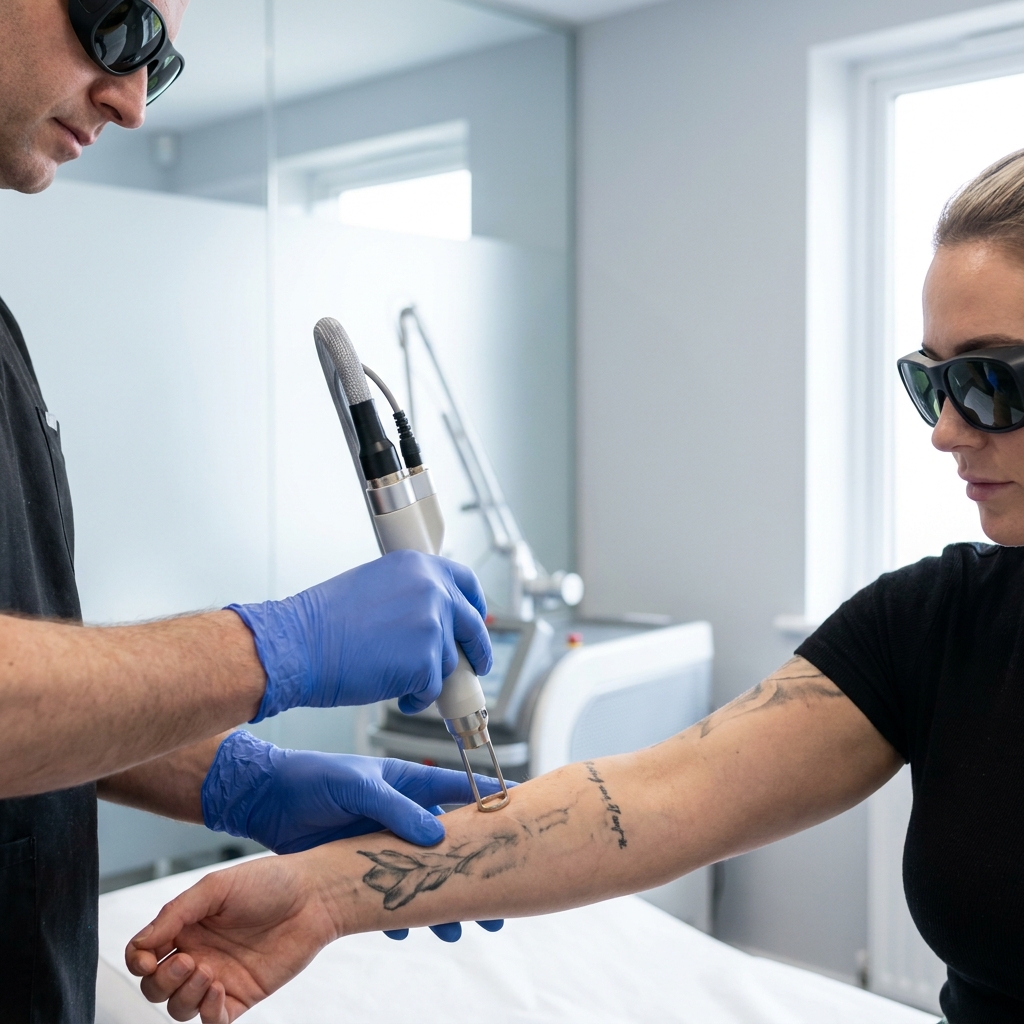
When a Q-switched or picosecond laser shatters tattoo ink, it produces a brief, intense burst of heat in the skin. As part of the healing response, fluid can collect beneath the upper layers of skin, lifting them into a blister. This is the body protecting and repairing the area, and it often means the laser has interacted strongly with the pigment. Blisters can appear within hours of a session, sometimes directly over the tattoo, and may be clear or slightly blood-tinged. They can range from tiny pinpoints to larger raised areas, and the amount varies from person to person and even between different sessions on the same tattoo. Understanding how lasers break down ink explains why this heat-driven reaction is expected rather than alarming, and why it tends to be more pronounced on denser or darker areas of a design.
How to care for blisters
The single most important rule is to leave them intact. The blister roof is a natural sterile dressing; popping or peeling it exposes raw skin and is the main avoidable cause of infection and scarring. Tempting as it is to drain a large blister, doing so removes the skin’s own protection at exactly the wrong moment.
- Do not pop, pierce or pick the blister, however large it looks.
- Keep the area clean — gently wash with mild soap and lukewarm water, then pat dry.
- Cover with a non-stick sterile dressing if it might rub against clothing.
- If a blister bursts on its own, keep it clean and covered and let it heal.
- Apply any ointment your clinic recommended, following the wider aftercare routine.
| Do | Do not |
|---|---|
| Leave the blister intact | Pop, pierce or drain it |
| Keep clean and covered | Pick the roof or scab |
| Let it heal naturally | Apply perfumed products |
| Protect from friction | Soak in pools or hot tubs |
When a blister needs attention
Most blisters settle within one to two weeks and leave no mark once the underlying skin has healed. However, you should seek advice from a pharmacist, your practitioner or your GP if a blister is unusually large, intensely painful, or shows signs of infection. Getting an unusual reaction checked early is sensible and never an overreaction, because an infection treated promptly is straightforward while one left to spread is the most common path to a permanent mark.
Will blisters affect my results or scarring?
Blisters themselves do not usually harm your final result, and they do not mean the treatment went wrong — they are part of normal healing for many people. The risk to your skin comes from interfering with them: picked or infected blisters are far more likely to lead to a lasting mark, while those left to heal naturally generally settle without trace. If you blister heavily after every session, tell your practitioner — the energy settings or the cooling can be adjusted at your next appointment, which is generally 6–8 weeks later once the skin has fully recovered. A consistent pattern of heavy blistering is useful information for tailoring your treatment.
How blisters fit into the wider healing process
It helps to see blisters as one stage in a predictable sequence rather than an isolated problem. After a session the skin is typically red and swollen first, blisters and pinpoint scabs may follow within hours, and over the next week or two the area scabs, flakes and heals over as the body carries away the shattered ink. Blistering is simply the body’s short-term response to the laser’s heat, and for most people it is the most dramatic-looking part of an otherwise routine recovery. Reading the full healing time guide alongside this page gives you the complete picture, so a blister appearing the morning after treatment feels expected rather than worrying. As with every other reaction, the safest approach is patience: keep it clean, keep your hands off it, and let your skin do the work. This page is general information, not medical advice; reactions vary by individual, and a patch test and consultation help predict how your skin will respond.
Frequently asked questions
Are blisters after tattoo removal normal?
Yes. Blisters are a common and usually normal part of healing, caused by the laser’s heat drawing fluid to the surface as the skin repairs. They typically settle within one to two weeks.
Should I pop a tattoo removal blister?
No. Leave it intact — the roof acts as a natural sterile dressing. Popping or picking exposes raw skin and raises the risk of infection and scarring.
What if the blister bursts on its own?
Keep the area clean with mild soap and water, pat it dry, cover with a non-stick dressing and let it heal naturally. Watch for signs of infection.
Do blisters mean my skin will scar?
Not on their own. Scarring risk rises mainly when blisters are picked, popped or become infected. Leaving them alone and following aftercare keeps the risk low.
Sources & further reading
- NHS — Blisters: causes, treatment and prevention
- NHS — Laser and intense pulsed light (IPL) treatments
- NHS — How to treat a skin wound and prevent infection
- British Medical Laser Association (BMLA) — Patient aftercare information
This guide is general information, not medical advice. A patch test and consultation with a qualified, regulated practitioner are essential before treatment, and results vary by individual. Discuss any skin or health concerns with the practitioner or your GP.