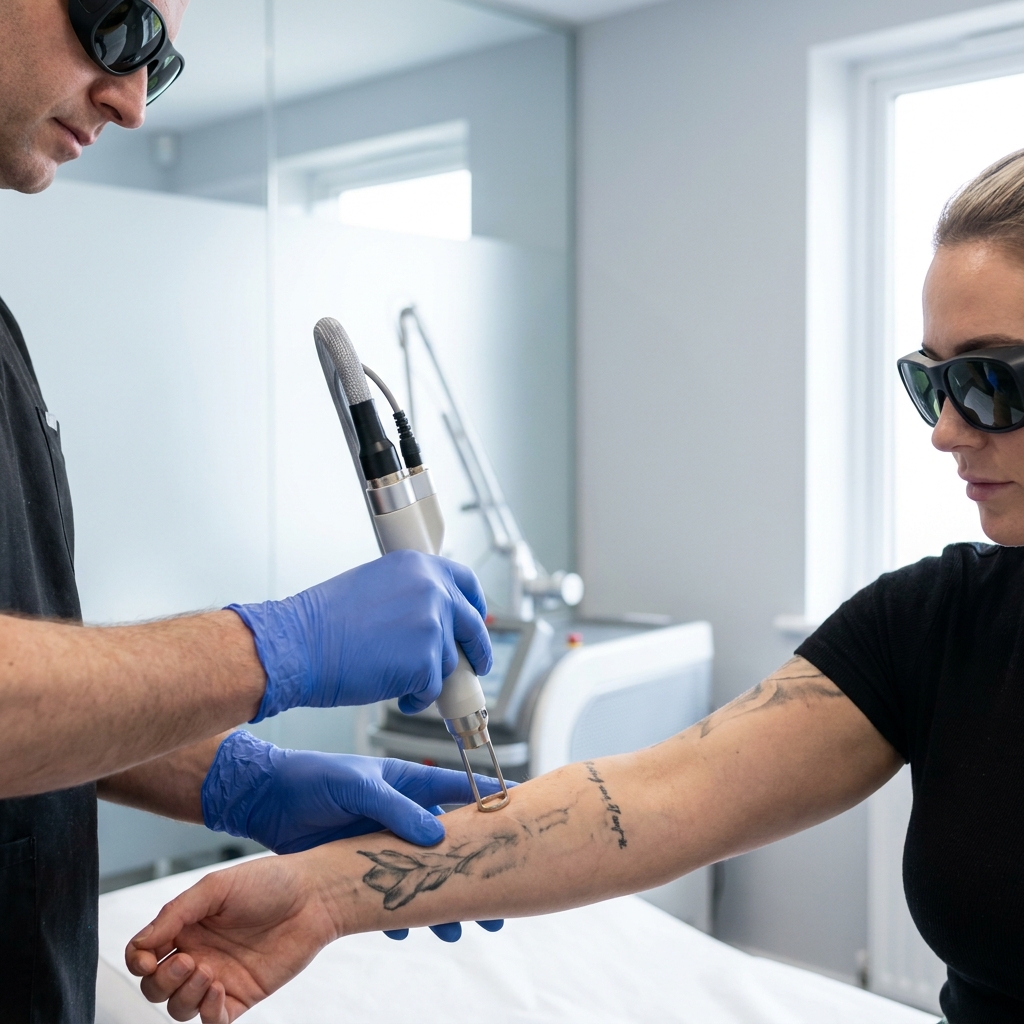
The short answer
Most skin reactions to laser tattoo removal — frosting, redness, swelling and blistering — are normal and temporary. Some people see pigment changes (lightening or darkening), which are usually temporary but can be more noticeable on richer skin tones. Rarely, an allergic-type reaction to released ink can occur. A patch test helps predict how your skin responds. Reactions vary by skin type, ink and aftercare, so suitability should always be assessed by a qualified practitioner.
Your skin responds visibly to laser tattoo removal — that response is how you and your practitioner know the energy is working. The skill is in telling apart the normal, expected reactions from the few that need attention. This page walks through what each reaction means, why some skin tones need extra care, and the rare reactions worth knowing about.
Skin reactions at a glance
- Immediate Frosting (temporary whitening)
- Within hours Redness, swelling, blisters
- Possible Pigment lightening or darkening
- More noticeable on Richer skin tones
- Rare Allergic-type reaction to ink
- Predicted by A patch test
Normal, expected reactions
The most immediate reaction is frosting — a temporary white discolouration over the tattoo as the laser interacts with the ink and releases tiny amounts of gas at the skin surface. It appears within seconds and fades within minutes, and a trained practitioner treats it as a sign the energy is being absorbed correctly. Over the following hours you can expect redness, swelling and sometimes blistering and pinpoint bleeding, much like the reactions covered in side effects. These are normal signs of healing rather than complications, and they typically settle within one to two weeks with good care.
- Frosting — immediate whitening, gone within minutes.
- Redness and swelling — like mild sunburn, settles in days.
- Blisters and scabs — part of healing; leave them alone.
- Itching and tightness — common as the skin repairs; avoid scratching.
Pigment changes
As the skin recovers it can temporarily change colour. Hyperpigmentation (darkening) and hypopigmentation (lightening) are the two patterns. Both are usually temporary, resolving over weeks to months, but can be more pronounced and slower to fade on richer skin tones — which is exactly why settings must be tailored and conservative, as explained in removal on different skin tones. Sun exposure makes pigment changes more likely and more lasting, so protecting the area from ultraviolet light is an important part of aftercare. If you tend to mark or discolour easily after cuts or spots, mention it at your consultation so treatment can be planned accordingly.
| Reaction | What it is | Usual course |
|---|---|---|
| Frosting | Immediate whitening | Minutes |
| Redness, swelling | Inflammatory response | Hours to days |
| Hyperpigmentation | Temporary darkening | Weeks to months |
| Hypopigmentation | Temporary lightening | Weeks to months |
| Allergic-type reaction | Rare response to released ink | Needs assessment |
Rare reactions to know about
Occasionally, breaking down certain inks can trigger an allergic-type or localised reaction, sometimes with itching, raised skin or a rash beyond normal healing. Certain pigments, particularly some reds and yellows, have been more often associated with such responses. This is uncommon but is one of the reasons a patch test is done before a full session, and why you should report any unusual, persistent or spreading reaction rather than assuming it will pass on its own.
How a patch test helps
A patch test treats a small area first and is reviewed after a healing interval, so your practitioner can see how your skin actually reacts before committing to the full tattoo. It is the best practical predictor of pigment changes and rarer reactions, and it costs little time compared with the reassurance it gives.
Telling normal reactions from warning signs
Most of the time, the difference between a normal reaction and one that needs attention is straightforward once you know what to look for. Normal reactions are confined to the treated area, appear soon after the session, and improve steadily over one to two weeks: redness fading, scabs flaking, the skin closing over. Warning signs, by contrast, tend to get worse rather than better, or spread beyond the tattoo: increasing pain after the first day or two, redness creeping outward, heat, pus, a rash spreading to untreated skin, or a fever. Pigment changes are not an emergency — they simply need monitoring and sun protection — but anything suggestive of infection or a spreading allergic-type reaction should be checked promptly. When in doubt, it is always reasonable to ask a pharmacist, your practitioner or your GP; describing what you see and how it is changing usually makes the right course of action clear. This page is general information, not medical advice; skin reactions vary by individual, ink type and skin type, so suitability must always be assessed at a consultation with a qualified, regulated practitioner.
Frequently asked questions
Why does my skin turn white during treatment?
That is frosting — a normal, temporary whitening as the laser interacts with the ink. It appears within seconds and fades within minutes, and is not a burn or a complication.
Will tattoo removal change my skin colour?
It can cause temporary lightening or darkening as the skin heals. These pigment changes usually fade over weeks to months but can be more noticeable on richer skin tones.
Can the released ink cause an allergic reaction?
Rarely. Breaking down certain inks can trigger an allergic-type reaction. A patch test helps reveal this, and any unusual, itchy or spreading reaction should be assessed by a clinician.
Does a patch test really help?
Yes. Treating a small area first and reviewing it after healing is the best practical way to predict pigment changes and rarer reactions before committing to the full tattoo.
Sources & further reading
- NHS — Laser and intense pulsed light (IPL) treatments
- NHS — Skin pigmentation disorders
- NHS — Allergies: symptoms and when to get help
- British Medical Laser Association (BMLA) — Skin reaction guidance
This guide is general information, not medical advice. A patch test and consultation with a qualified, regulated practitioner are essential before treatment, and results vary by individual. Discuss any skin or health concerns with the practitioner or your GP.