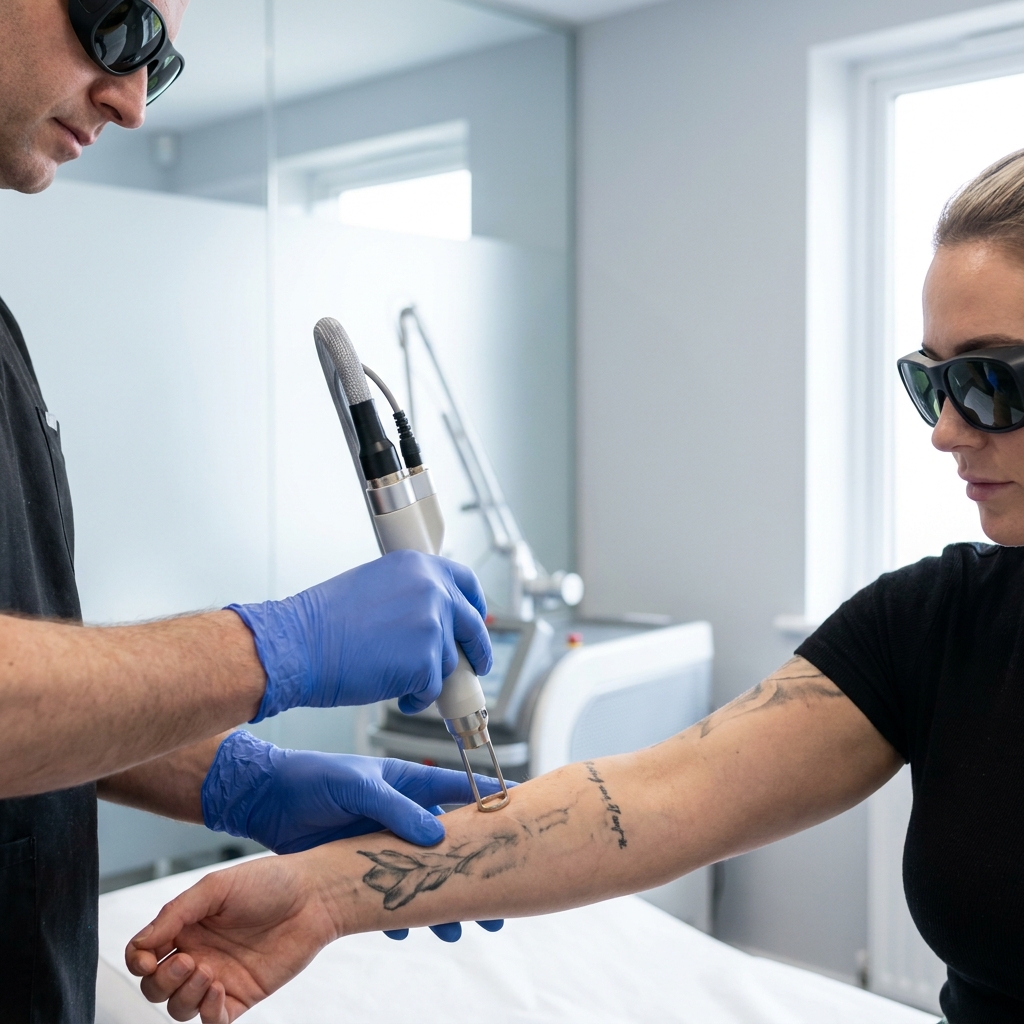
The short answer
Tattoo removal can be done across the full range of skin tones, but the laser settings must be adjusted carefully. Because the laser also sees the skin’s natural pigment (melanin), darker skin needs specific wavelengths and gentler settings to reduce the risk of pigment change — lightening or darkening of the treated area. A patch test and a practitioner experienced with your skin tone are essential. Results and risks vary by individual.
Skin tone is one of the most important factors in safe, effective tattoo removal, yet it is often glossed over. Because lasers target pigment, and skin contains its own pigment, the approach has to be tailored. This page explains how skin tone affects removal and why an experienced practitioner matters.
Skin tone and removal at a glance
- Suitable for All skin tones, with care
- Key issue Laser also targets skin melanin
- Darker skin Needs specific wavelengths, gentler settings
- Main risk Pigment change (lighter or darker)
- Essential Patch test & experienced practitioner
- Outcome Varies by individual
Why skin tone matters
A removal laser works by targeting pigment. Tattoo ink is pigment — but so is melanin, the natural colour in your skin. The more melanin your skin contains, the more the laser can inadvertently affect the skin itself alongside the ink. This is why settings safe for very fair skin can be unsafe for darker skin, and why a one-size-fits-all approach is wrong and potentially harmful. The underlying mechanism is explained in how lasers break down ink. The skill lies in delivering enough energy to fragment the ink while sparing the skin’s own melanin as much as possible.
Adjusting for darker skin tones
Removal is entirely possible on darker skin, but it requires care. Practitioners typically use specific wavelengths that are absorbed more by ink than by melanin, lower energy settings, and often more sessions spaced further apart to let the skin recover fully between visits. Certain longer wavelengths are generally considered safer for richly pigmented skin because they are absorbed less by melanin. The aim is to clear the ink while minimising the risk of disturbing the skin’s own pigment. An experienced practitioner who regularly treats darker skin is far better placed to make these judgements safely than one who rarely does.
- Wavelength choice: certain longer wavelengths spare melanin better.
- Gentler settings: lower energy reduces the risk to the skin.
- More patience: sometimes more sessions, more cautiously spaced.
- Patch test: doubly important to gauge the skin’s reaction before full treatment.
- Cooling and aftercare: careful cooling and diligent aftercare help the skin recover.
The main risk: pigment change
The chief skin-tone-related risk is a change in pigmentation of the treated area. This can be hypopigmentation (the skin becoming lighter) or hyperpigmentation (becoming darker). It may be temporary, often settling over months, or, less commonly, longer lasting. Careful settings, conservative energy levels, good aftercare and strict sun protection all reduce the risk. This is one reason practitioners often start cautiously and build up as they see how your skin responds. Our guides to side effects and skin reactions cover this more fully.
| Consideration | Why it matters |
|---|---|
| Melanin level | Higher melanin needs more careful settings |
| Wavelength | Some spare skin pigment better |
| Energy setting | Lower energy reduces skin risk |
| Sun exposure | Tanned skin raises the risk of pigment change |
| Practitioner experience | Familiarity with your skin tone is key |
More patience, more sessions
Because settings are gentler and sessions are spaced more cautiously, removal on darker skin can take longer overall, with more sessions needed to reach the same degree of fading. This is a sensible trade-off: a slower, safer course protects the skin and reduces the chance of lasting pigment change. A good practitioner will be upfront that the priority is your skin’s safety, not speed, and will adjust the plan as they see how your skin responds across the early sessions.
Choosing the right practitioner
For any skin tone — and especially darker skin — the single most important safeguard is a practitioner experienced with your skin and a thorough patch test before full treatment. Ask directly about their experience treating your skin tone and what wavelengths they use; a confident, honest answer is reassuring, while vagueness is a warning sign. It is reasonable to ask to see examples of their work on skin like yours, and to expect them to explain the risks plainly rather than glossing over them. Our guide to choosing a clinic can help you weigh this up. This page is general information, not medical advice; suitability and skin questions should always go to a qualified practitioner, and results vary by individual. Complete removal cannot be guaranteed for any skin tone.
Frequently asked questions
Can darker skin tones have tattoo removal?
Yes. Removal works across the full range of skin tones, but darker skin needs specific wavelengths and gentler settings to reduce the risk of pigment change, plus an experienced practitioner.
What is the main risk for darker skin?
The chief risk is a change in skin pigment in the treated area — either lightening or darkening. Careful settings, good aftercare and strict sun protection help reduce this risk.
Why does a patch test matter more for darker skin?
Because the laser also interacts with skin melanin, a patch test is vital to see how your skin reacts before full treatment, helping the practitioner set safe wavelengths and energy.
Should I avoid the sun before treatment?
Yes. A tan increases melanin and the risk of pigment change. Practitioners generally advise keeping the area out of the sun and using high-factor protection before and between sessions.
Sources & further reading
- NHS — Skin, melanin and laser treatments
- MHRA — laser and IPL device regulation
- British Medical Laser Association (BMLA) — skin type and laser safety
- JCCP — practitioner standards
This guide is general information, not medical advice. A patch test and consultation with a qualified, regulated practitioner are essential before treatment, and results vary by individual. Discuss any skin or health concerns with the practitioner or your GP.