The short answer
Laser tattoo removal works for most tattoos but cannot be guaranteed to clear them completely. It usually takes 6–12 sessions, spaced 6–8 weeks apart, at roughly £50–£200 per session. It is generally safe with a qualified practitioner, though side effects like blistering can occur. Black ink clears best; some colours resist. A consultation and patch test are essential. This is general information, not medical advice, and results vary by individual.
Tattoo removal raises the same handful of questions for almost everyone — does it work, will it hurt, what does it cost, is it safe. This page brings together calm, sourced answers to the most common ones and points you to the in-depth guides where each is covered in full.
The essentials at a glance
- Does it work? Usually fades tattoos; full removal not guaranteed
- Sessions Typically 6–12, sometimes more
- Spacing Every 6–8 weeks
- Cost Around £50–£200 per session
- Best response Black ink
- Essential first Consultation & patch test
Does laser tattoo removal actually work?
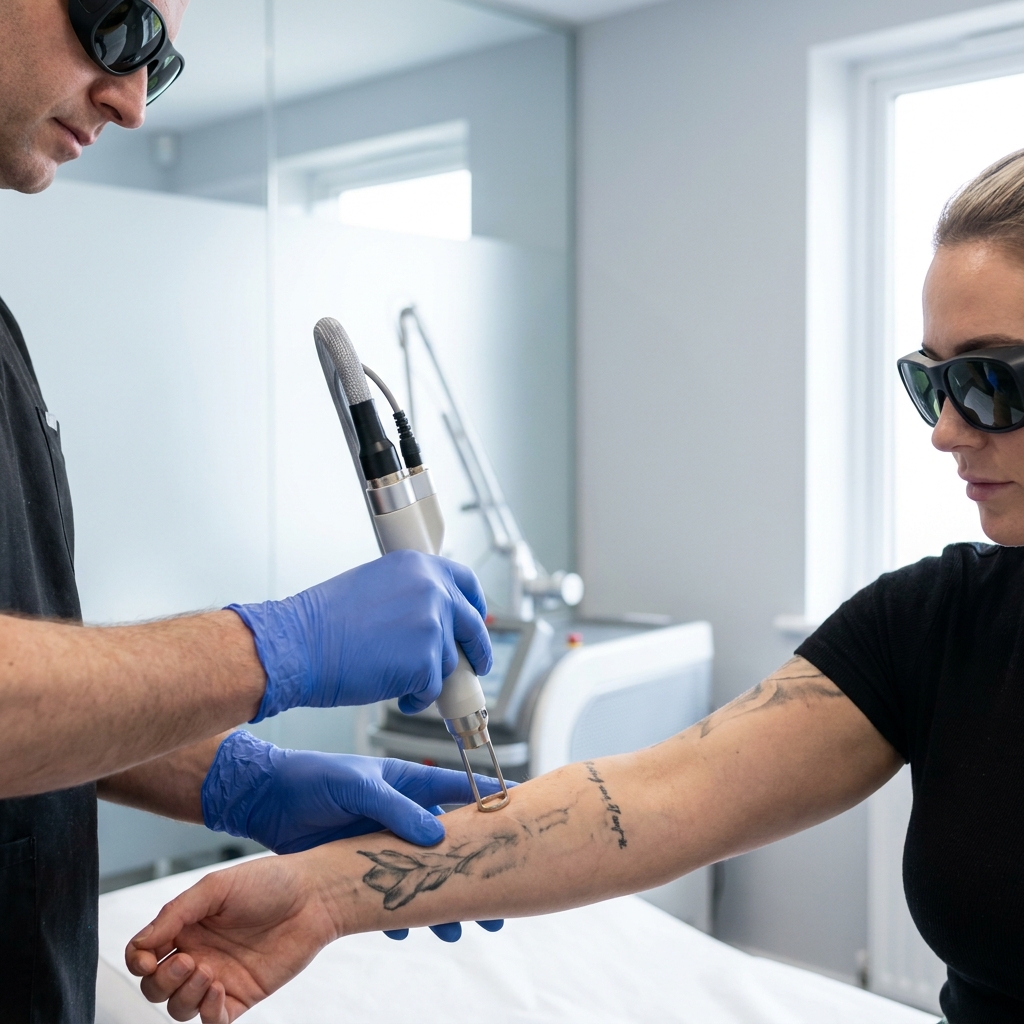
For most tattoos, yes — laser removal can significantly fade or clear ink over a course of treatments, but complete removal can never be guaranteed. The laser shatters ink into fragments that your immune system gradually carries away, which is why results build slowly across several sessions rather than appearing at once. How well a tattoo responds depends on the ink colours, the age and density of the tattoo, its location, and your skin. Black ink generally clears best, while colours such as green, light blue and yellow can be stubborn. For the full picture see does tattoo removal work and can all tattoos be removed.
It is worth setting expectations honestly from the outset. Removal is a process of fading, not erasing on demand, and the most reliable practitioners describe a likely range of outcomes rather than a guaranteed result. Many people achieve a tattoo that is faded enough to be barely noticeable or ready for a cover-up, while a smaller number find some pigment proves stubborn. Going in with realistic expectations makes the months of treatment far easier to judge and far less likely to disappoint.
How many sessions, how long, and how much?
Most courses run to 6–12 sessions, sometimes more for stubborn ink, spaced about 6–8 weeks apart so the skin can recover and the body can clear the fragmented pigment. Per-session cost is commonly in the region of £50–£200 depending on the size of the tattoo, so a small piece may total a few hundred pounds across a course while larger work runs higher.
| Question | Typical answer |
|---|---|
| Sessions needed | 6–12, sometimes more |
| Time between sessions | 6–8 weeks |
| Cost per session | £50–£200 by size |
| Full removal guaranteed? | No — results vary |
For detail, see how many sessions, how long it takes and tattoo removal cost.
Does it hurt, and is it safe?
Most people find laser removal uncomfortable rather than unbearable, often likening it to the snap of an elastic band against the skin; numbing options can help. Performed by a qualified practitioner with appropriate equipment, it is generally considered safe, though side effects can occur. These include temporary redness, swelling, blistering and, less commonly, pigment changes or, rarely, scarring. Following aftercare advice reduces the risk.
- Discomfort — usually brief and tolerable; see does it hurt.
- Common effects — redness, swelling, blistering; see side effects.
- Aftercare — protect and don’t pick the area; see aftercare.
- Safety — depends heavily on the practitioner; see is it safe.
How do I choose a clinic safely?
Choose on competence, not price. Look for laser-specific training, JCCP registration where possible, professional indemnity insurance, and a clear consultation-and-patch-test process. Because regulation varies across the UK — from local-authority licensing in England to HIS, HIW and the RQIA in Scotland, Wales and Northern Ireland — you should verify a clinic yourself. Our guides on choosing a clinic, finding a clinic and UK regulation walk through every check.
Where to go next
These answers are a starting point, not a substitute for a proper assessment of your own tattoo and skin. If you are weighing up removal, read the in-depth guides linked above, then book consultations with two or three qualified clinics and compare how thoroughly each assesses you. Whatever you decide, insist on a patch test, ask the right questions, and remember that good removal is a patient course over months — honest about its limits and built around your safety. There is no need to rush the decision: the right clinic will give you time, set realistic expectations, and treat your skin’s safety as the priority at every session. Armed with the answers above and a careful, qualified practitioner, you can approach tattoo removal with confidence rather than guesswork.
Frequently asked questions
Can every tattoo be fully removed?
No. Most tattoos fade significantly, but complete removal cannot be guaranteed. Black ink responds best, while green, light blue and yellow can be stubborn, and results vary by individual.
How much does laser tattoo removal cost in the UK?
Commonly around £50–£200 per session depending on size, over a course of typically 6–12 sessions. A small tattoo may total a few hundred pounds; larger pieces cost more.
Is laser tattoo removal safe?
With a qualified practitioner and proper equipment it is generally considered safe, though side effects such as blistering or temporary pigment change can occur. A patch test and good aftercare reduce the risks.
Do I need a consultation and patch test?
Yes. A consultation assesses your suitability and a patch test reveals how your skin reacts before a full course. Avoid any clinic that skips either step.
Sources & further reading
- NHS — Laser and IPL treatments and cosmetic procedures
- MHRA — Regulation of lasers and intense light source devices
- JCCP — choosing a cosmetic practitioner safely
- British Medical Laser Association (BMLA) — standards for practitioners
This guide is general information, not medical advice. A patch test and consultation with a qualified, regulated practitioner are essential before treatment, and results vary by individual. Discuss any skin or health concerns with the practitioner or your GP.