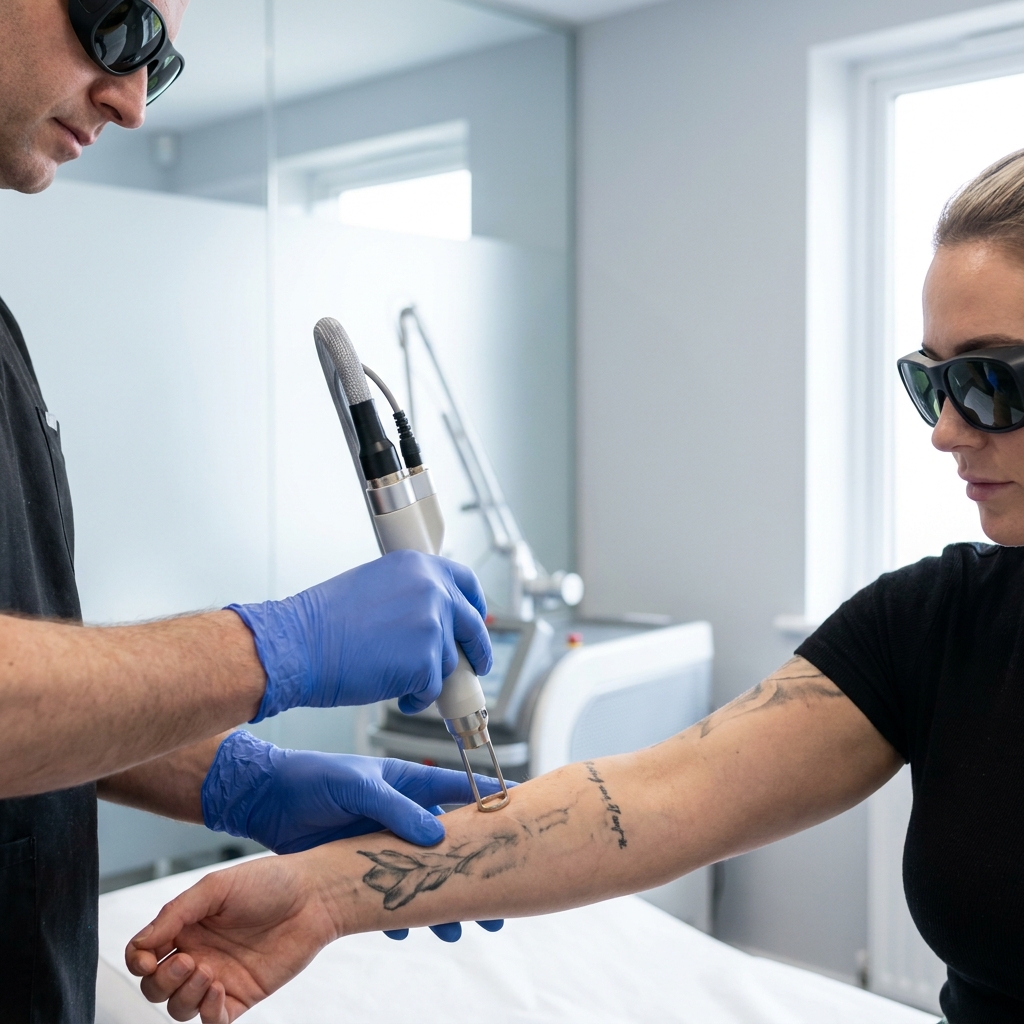
The short answer
Each laser session usually takes only a few minutes, but a full course often spans 9–18 months because sessions are spaced 6–8 weeks apart. You need around 6–12 sessions, and the gap between them lets your body clear pigment and your skin recover. Larger or more colourful tattoos take longer. The timeline is an estimate — it depends on how your tattoo responds, which a practitioner judges as treatment progresses.
There are two timescales to understand: the session itself, which is short, and the whole course, which is long. People are often surprised that removal takes the best part of a year or more, but the spacing between sessions is deliberate and cannot be safely rushed. This page sets out both timescales and what stretches them.
Timeline at a glance
- One session A few minutes for small tattoos
- Spacing 6–8 weeks apart
- Sessions Usually 6–12
- Full course Often 9–18 months
- Large pieces Can exceed a year
- Why spaced Body clears pigment, skin recovers
The session vs the course
There are two timescales to keep separate. A single laser session is quick — often just a few minutes for a small tattoo, and longer for larger pieces or whole areas. But removal is a course, and the total time is dominated by the gaps between sessions, not the sessions themselves. With around 6–12 sessions spaced 6–8 weeks apart, a full course commonly spans 9 to 18 months, and large or colourful tattoos can take longer still. People are often surprised by this, but the spacing is deliberate and central to getting a good, safe result.
This staged pace is the same one explained in how many sessions you need and session spacing, and it stems directly from how the body clears shattered ink.
Why it can’t be rushed
The spacing exists for sound clinical reasons, and shortening it is counterproductive:
- Pigment clearance — after each session your immune system carries away the shattered ink over several weeks; treating again before that work is done does not speed anything up.
- Skin recovery — the treated area needs to heal fully between sessions to reduce the risk of blistering, scarring and pigment changes; see healing time.
- Assessing progress — the gap lets the practitioner see how your tattoo has responded once it has settled, and adjust the plan and settings accordingly.
| Stage | Typical duration |
|---|---|
| Consultation & patch test | One visit, then a short wait before starting |
| Each session | A few minutes, longer for large tattoos |
| Gap between sessions | 6–8 weeks |
| Full course (6–12 sessions) | Often 9–18 months |
What makes it longer
Some tattoos take more time than the typical course, and several factors can extend the calendar:
- Colour — green, light blue and yellow are stubborn and may need extra sessions, lengthening the course.
- Size and density — large, saturated pieces such as a sleeve often run well past a year, especially if treated in sections.
- Location and circulation — the hands, feet and lower legs can clear more slowly because of poorer blood flow.
- Skin recovery — if your skin needs longer to heal between visits, the gaps — and the overall timeline — lengthen accordingly.
What you’ll notice along the way
Fading is gradual rather than sudden, so you will usually see the tattoo lighten in stages across the course rather than disappear in a single dramatic step. The most noticeable change often comes in the earlier-to-middle sessions, with later sessions chasing the more stubborn remnants — particularly any difficult colours. Some sessions may seem to make little visible difference while the deeper ink is being broken down. This is normal, and a practitioner monitoring your progress between visits will tell you whether the response is on track. Read fading stages for what to expect visually.
Planning around the timeline
Because removal spans many months, plan for the long haul — including spreading the cost, which our financing guide covers. If you are removing a tattoo before a wedding, a new job or a cover-up, start as early as you can and build in extra time, since the final session count is only an estimate and may grow if your ink proves stubborn. Rushing the end of a course to hit a deadline is exactly when skin problems arise. This page is general information, not medical advice; your individual timeline should come from a qualified practitioner after a consultation and patch test, and may be revised as your tattoo responds.
Frequently asked questions
How long does one tattoo removal session take?
Usually only a few minutes for a small tattoo, and longer for larger pieces. The appointment itself is short; the time-consuming part is the weeks of spacing between sessions.
Why does the whole course take so long?
Sessions are spaced 6–8 weeks apart so your body can clear shattered pigment and your skin can recover. With 6–12 sessions, a course often spans 9–18 months.
Can I have sessions closer together to finish faster?
No — it is not safe or effective. Crowding sessions does not speed up pigment clearance and increases the risk of side effects. Spacing is there to protect your skin.
How long for a large or colourful tattoo?
Often well over a year. Large, dense or multi-colour pieces need more sessions, and stubborn colours may extend the course further. It is an estimate until assessed.
Sources & further reading
- NHS — Cosmetic procedures: laser and light treatments and recovery
- MHRA — Guidance on lasers and IPL safety
- BMLA — guidance on treatment intervals and skin recovery
- JCCP — patient information on realistic treatment timelines
This guide is general information, not medical advice. A patch test and consultation with a qualified, regulated practitioner are essential before treatment, and results vary by individual. Discuss any skin or health concerns with the practitioner or your GP.