The short answer
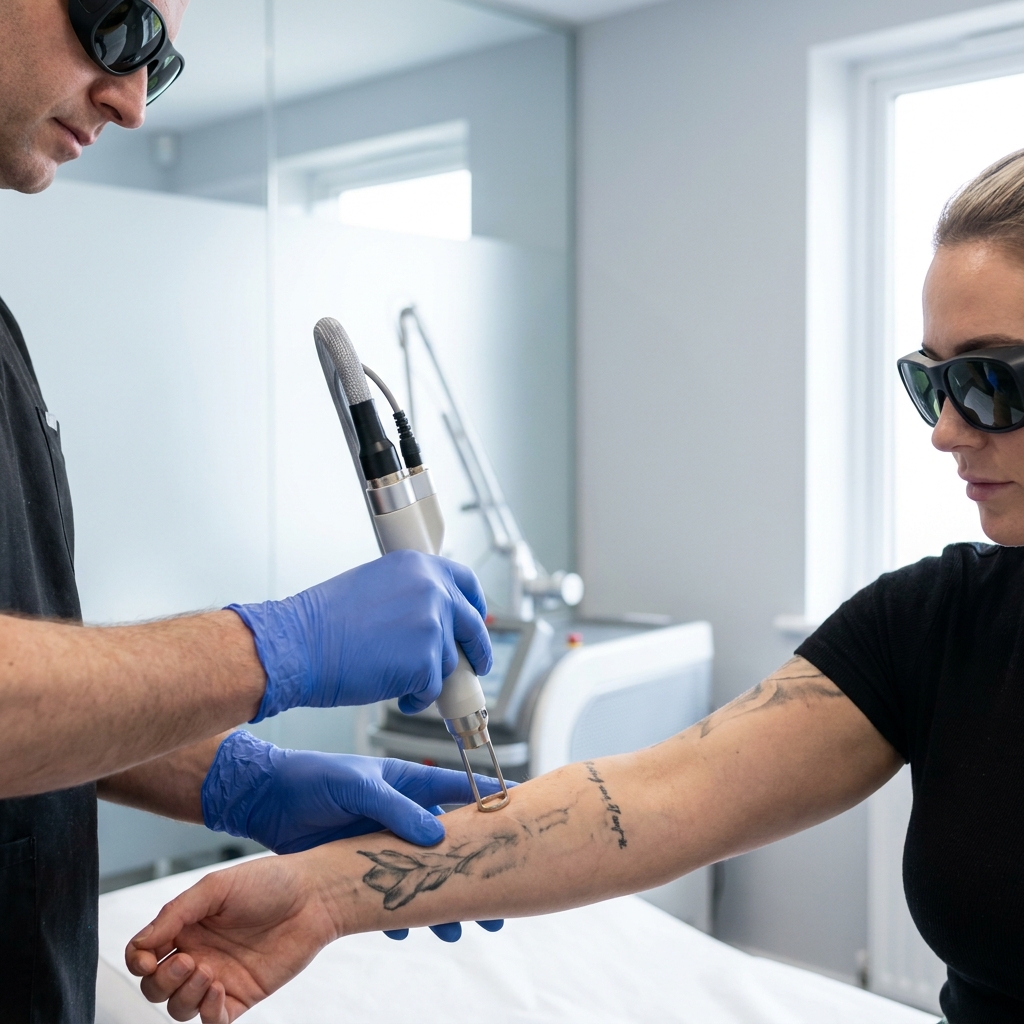
Yes — laser tattoo removal works, and for many tattoos it can achieve substantial or near-complete fading. But it is gradual, takes a course of 6–12 sessions, and results vary. Black ink clears best; some colours and dense or layered ink can resist treatment. Complete removal cannot be guaranteed, and a faint shadow or slight skin change can remain. A consultation gives a realistic forecast for your tattoo.
“Does it actually work?” is the most common question people ask before starting removal, often after seeing exaggerated before-and-after photos online. The honest answer is yes, with realistic caveats. This page sets out what laser removal can and cannot achieve so you can decide with clear eyes.
Does it work? At a glance
- Overall Yes, for most tattoos
- Best results Black ink, older tattoos
- Hardest Green, light blue, yellow
- Typical course 6–12 sessions
- Outcome Substantial fading; full removal not guaranteed
- Decided at A professional consultation
The short, honest answer
Laser tattoo removal genuinely works. For many people it fades a tattoo so significantly that it is barely noticeable, and for some it disappears entirely. But it is a process, not a single event, and the outcome is never guaranteed in advance. The realistic promise is meaningful fading over a course of sessions — typically 6–12, spaced 6–8 weeks apart — with the degree of final clearance depending on factors specific to your tattoo and skin. The mechanism behind this is explained in how tattoo removal works. It is worth being sceptical of dramatic before-and-after images online, which often show the easiest cases and rarely mention how many sessions, or how much time, they took.
What works best
Some tattoos respond far better than others. The clearest results tend to come from older, professionally applied black tattoos on lighter skin, where the laser can target the ink efficiently and the skin can be treated at safe settings. Newer, densely packed or multi-coloured tattoos take longer and may not clear completely, simply because there is more ink, and a wider range of colours, for the laser and your body to deal with.
- Ink colour: black responds best; green, light blue and yellow are notoriously stubborn — see tattoo ink colours and removal.
- Tattoo age: older tattoos have often already begun to fade, so they tend to clear faster.
- Depth and density: deep, heavily layered or amateur ink can be harder to predict.
- Skin tone: influences the safe settings and the risk of pigment change — see removal on different skin tones.
Where the limits are
Even with the best technology and a skilled practitioner, complete removal cannot be promised. A faint “ghost” of the design, slight textural change or a small difference in skin pigment can remain. Some colours may never fully clear, and a dense or heavily layered piece can plateau before it vanishes entirely. This is not a failure of the method; it is the reality of how ink, skin and biology interact. Honest clinics set this expectation at the consultation rather than promising a blank canvas, and treat any guarantee of total removal with suspicion.
| Tattoo type | Realistic outcome |
|---|---|
| Old black ink | Often fades very well |
| New black ink | Fades well but needs more sessions |
| Multi-coloured | Mixed — some colours resist |
| Amateur / DIY | Variable, sometimes faster |
How long until it works
Patience is part of the deal. Because each session only breaks down some of the ink and the body needs weeks to clear the fragments, visible results build slowly across the course rather than appearing after one visit. Many people see the most obvious change in the middle of their course, with the final, most stubborn traces taking the longest. Skipping sessions or shortening the gaps does not speed things up and can raise the risk of skin reactions, so steady progress at 6–8 week intervals is the norm.
How to judge it for your own tattoo
The only reliable way to know how well removal will work for you is a consultation and patch test with a qualified practitioner, who can assess the ink, your skin and your goals. They can give a realistic, individual forecast rather than a generic promise. If your aim is a new design rather than bare skin, removal versus cover-up is worth reading, and is tattoo removal worth it weighs the cost and effort. This page is general information, not medical advice; results vary by individual and complete removal cannot be guaranteed.
Frequently asked questions
Will laser removal completely erase my tattoo?
It often fades a tattoo dramatically and can clear some completely, but full removal cannot be guaranteed. A faint shadow or slight skin change can remain, especially with stubborn colours.
How many sessions before I see real results?
Fading is gradual and builds across the course. Most tattoos need 6–12 sessions, and you typically see meaningful change over several treatments rather than after just one.
Why do some tattoos not fully disappear?
Certain colours absorb laser light poorly, and dense, deep or layered ink resists treatment. Skin tone and individual healing also affect the final result, so outcomes vary.
Does it work on coloured tattoos?
It can, but colours vary widely. Black clears best, while green, light blue and yellow are much harder and may not fully fade even after a long course of sessions.
Sources & further reading
- NHS — Cosmetic procedures: what to expect
- MHRA — laser device regulation
- British Medical Laser Association (BMLA) — clinical guidance
- JCCP — setting realistic expectations
This guide is general information, not medical advice. A patch test and consultation with a qualified, regulated practitioner are essential before treatment, and results vary by individual. Discuss any skin or health concerns with the practitioner or your GP.