The short answer
Yes, topical numbing cream can reduce the discomfort of laser tattoo removal, but it should be used on a practitioner’s advice. Creams containing local anaesthetics such as lidocaine dull the skin’s pain signals when applied beforehand. They must be used correctly — right amount, right timing, right area — because overuse or applying to broken skin can cause problems. Many clinics rely mainly on cooling instead or alongside. Always follow your clinic’s and the product’s instructions; suitability varies by individual.
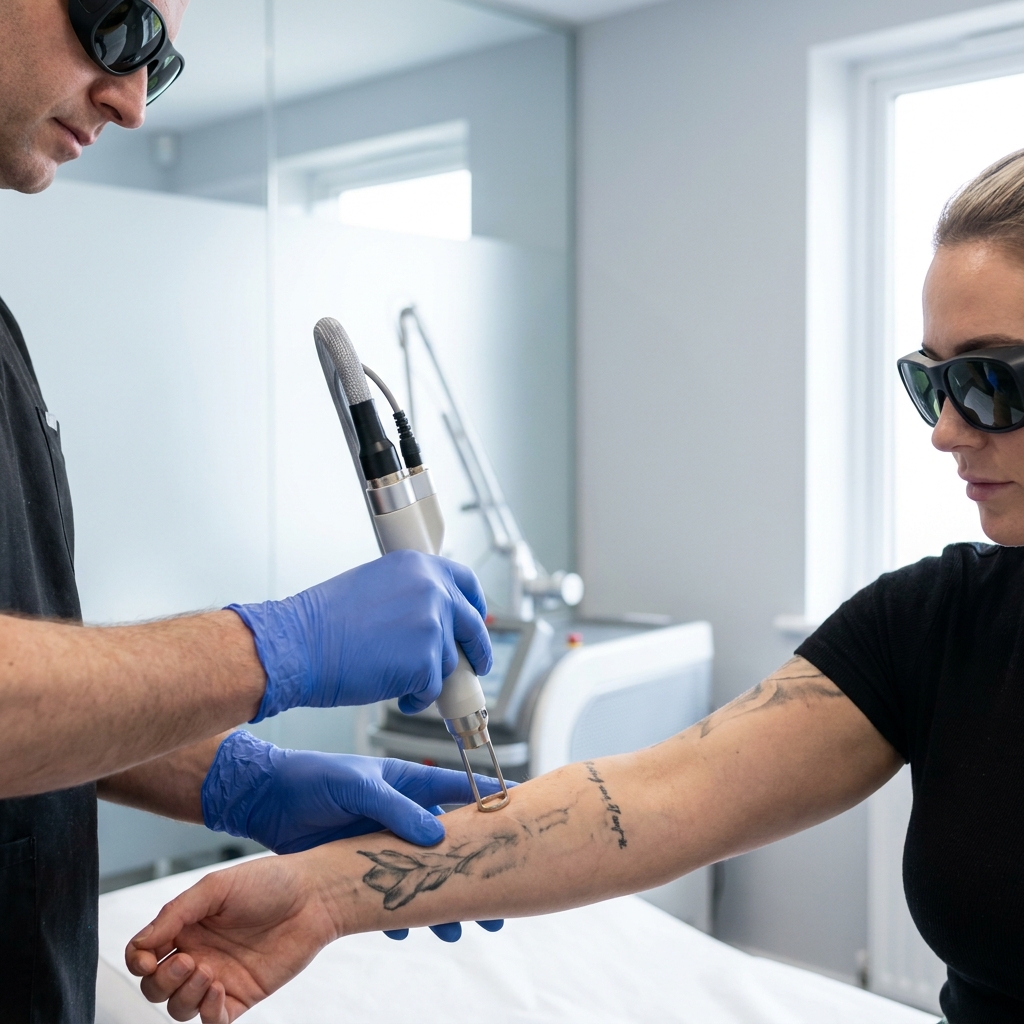
Numbing cream is the option people ask about most when they are nervous about pain. Used sensibly it can take the edge off, but it is a medicine, not a cosmetic, and using it carelessly carries its own risks. This page explains how topical anaesthetics work, how clinics use them alongside cooling, and the safety points that matter.
Numbing cream at a glance
- What it is Topical local anaesthetic
- Common ingredient Lidocaine
- Applied Before the session, as advised
- Works by Dulling skin pain signals
- Key caution Never on broken skin; don’t overuse
- Often paired with Clinic cooling devices
How numbing cream works
Topical numbing creams contain a local anaesthetic — commonly lidocaine, sometimes combined with another agent — that temporarily blocks the nerve signals in the upper skin from reaching the brain as pain. Applied to intact skin a set time before treatment, and usually covered with a film to help it absorb, the cream dulls the sharp, hot snap of the laser. It does not stop the treatment working or change the final result in any way; it simply makes the experience more comfortable. The effect builds over the application period, peaks for the session, and then wears off, with normal sensation returning afterwards. Because the right timing matters, clinics that use it will tell you exactly when and how to apply it.
Using it safely
Because it is a medicine rather than a cosmetic, a numbing cream has to be used correctly. The main safety points are straightforward but genuinely important:
- Follow guidance on amount and timing. Applying far more than directed, or over a very large area, can lead to too much anaesthetic being absorbed into the body.
- Never apply to broken skin. Do not use it on blistered, scabbed or still-healing areas from a previous session, as absorption is unpredictable there.
- Use the product as instructed. Follow the clinic’s advice and the patient information leaflet for the specific product.
- Tell your practitioner about allergies, medication and medical conditions, as some people should avoid certain anaesthetics.
| Do | Avoid |
|---|---|
| Use on a practitioner’s advice | Slathering on far more than directed |
| Apply to intact skin only | Using on broken or healing skin |
| Follow timing instructions | Covering huge areas at once |
| Disclose allergies/medication | Ignoring the patient leaflet |
Cream versus cooling
Many clinics manage discomfort mainly with cooling — cold air, chilled tips or ice packs — which is effective, carries no absorption risk and can be used during treatment, not just before it. Numbing cream and cooling are often combined for the most sensitive areas or for people who are particularly anxious about pain. Your practitioner will recommend the right approach for the area being treated and your own tolerance; see the wider pain guide for what the sensation is like and aftercare for managing soreness afterwards.
The bottom line
Numbing cream genuinely helps many people and is widely used, but it works best as part of a plan agreed with your clinic rather than as something to apply heavily on your own initiative. Treat it as the medicine it is, and let your practitioner guide the amount, timing and whether it is right for you at all.
When numbing cream is most useful
Numbing cream tends to make the biggest difference on the more sensitive areas of the body — ankles, ribs, fingers, the neck — and for people who are particularly anxious about pain or who have found previous sessions hard going. For a small tattoo on a fleshier area, cooling alone may be all that is needed, since the session is over quickly. Larger pieces are a different matter, because applying a strong anaesthetic across a wide area is exactly where the absorption cautions become important, so your practitioner may prefer to rely more on cooling and pacing. There is no single right answer; the best approach depends on the size and site of the tattoo, your pain tolerance and your medical history. The sensible plan is to raise it at your consultation, agree what you will use and when, and follow that plan rather than improvising on the day. This page is general information, not medical advice. Discuss pain relief, including numbing cream, at your consultation and patch test; suitability varies by individual and medical history.
Frequently asked questions
Does numbing cream stop tattoo removal hurting?
It reduces the discomfort rather than removing it entirely. Applied correctly before a session, a local anaesthetic cream dulls the skin’s pain signals without affecting the result.
Can I buy and apply numbing cream myself?
Use it only on a practitioner’s or pharmacist’s advice and follow the product instructions. Overusing it or applying it to broken skin can be harmful, so do not self-prescribe heavily.
Is cream better than cooling?
They do different jobs and are often combined. Cooling works during treatment and has no absorption risk; cream is applied beforehand. Your practitioner will recommend the right mix.
Can anyone use numbing cream?
No. Allergies, certain medications and some conditions mean it may not be suitable. Disclose your medical history so your practitioner can advise on safe pain relief.
Sources & further reading
- NHS — Local anaesthesia
- MHRA — Safe use of topical anaesthetic (numbing) products
- NHS — Laser and intense pulsed light (IPL) treatments
- British Medical Laser Association (BMLA) — Pain management guidance
This guide is general information, not medical advice. A patch test and consultation with a qualified, regulated practitioner are essential before treatment, and results vary by individual. Discuss any skin or health concerns with the practitioner or your GP.