The short answer
Laser removal is the main and safest method for most tattoos in the UK. Other recognised approaches include surgical excision (cutting the tattoo out, suitable only for small tattoos) and dermabrasion (sanding away skin layers, now rarely used). Creams, salt scrubs and DIY kits are not effective and can damage skin. The right method depends on the tattoo’s size, location and your skin, so a consultation is essential.
Not all tattoo removal is done with a laser, though laser is by far the most common and best-evidenced route. Knowing the full range — and the methods that simply do not work — helps you have a sensible conversation with a practitioner about what suits your tattoo.
Removal methods at a glance
- Most common Laser (Q-switched / picosecond)
- For small tattoos Surgical excision
- Rarely used now Dermabrasion
- Not effective Creams, salt, DIY kits
- Decided at Consultation with a practitioner
- Guarantee None promise complete removal
Laser removal: the standard method
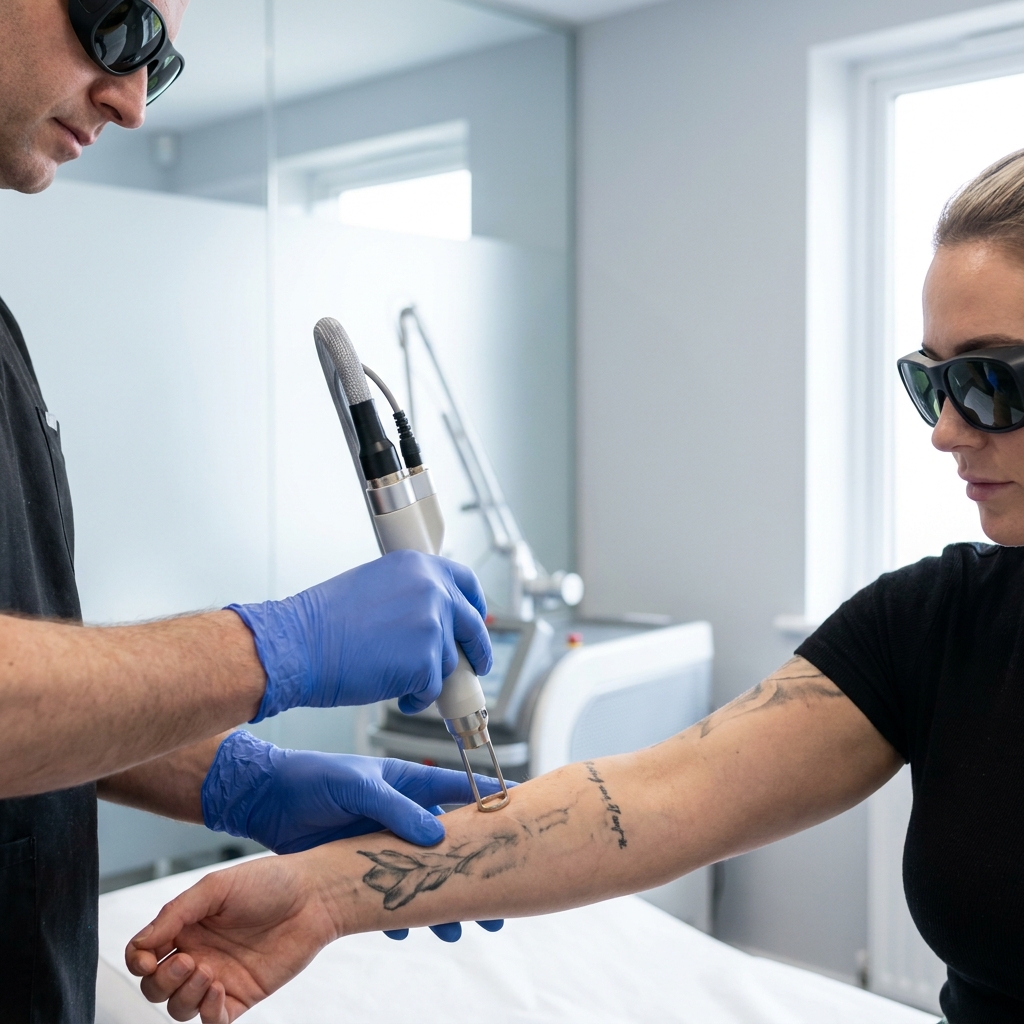
For the overwhelming majority of tattoos, laser is the method of choice. It targets the ink with pulses of light, fragmenting it so the body can clear it, and it does so without removing the skin itself. Because it is selective and repeatable, it suits tattoos of almost any size, including coloured and detailed pieces, though results still vary with colour and depth. The full mechanism is set out in how tattoo removal works and laser tattoo removal explained. Q-switched and picosecond lasers are the established devices — see picosecond versus nanosecond lasers. A typical course runs to 6–12 sessions spaced 6–8 weeks apart, at roughly £50–£200 per session depending on size.
Surgical excision
Surgical excision means a doctor cuts the tattoo out and stitches the skin back together. It is a genuine option, but only realistically for small tattoos, because larger areas cannot simply be closed without a skin graft. It removes the ink in one procedure rather than a course, which some people prefer, but it always leaves a scar where the skin is rejoined. In the UK this is a medical procedure and should be done by an appropriately qualified clinician, usually under local anaesthetic, with the wound needing time to heal much like any minor surgery.
Dermabrasion
Dermabrasion sands away the upper layers of skin to physically remove inked tissue. It was used historically but is now rarely chosen, because it is painful, carries a higher risk of scarring and pigment change, and gives less predictable results than laser. The treated area must heal as an open wound, and the depth needed to reach dermal ink makes scarring likely. It is mentioned here for completeness rather than as a recommendation, and most practitioners will steer you towards laser instead.
| Method | Best for | Main drawback |
|---|---|---|
| Laser | Most tattoos | Needs a course of sessions |
| Surgical excision | Small tattoos | Leaves a scar |
| Dermabrasion | Rarely used today | Painful, scarring risk |
| Creams / DIY | Nothing — avoid | Ineffective, can damage skin |
Methods that do not work
A large market of removal creams, acid peels, salt-and-abrasion scrubs and home “kits” promises easy fading. None of these reliably removes tattoo ink, which sits too deep in the skin for a topical product to reach, and several can cause chemical burns, infection or scarring. The appeal is obvious — they sound cheap and gentle — but the ink simply is not where a surface product can act, so the only thing these methods reliably damage is the skin itself. We unpick these in detail in natural tattoo removal myths, alongside why amateur DIY laser pens are unsafe for home use.
- Removal creams: cannot reach dermal ink; risk irritation and burns.
- Salt or sand abrasion: wounds the skin without clearing ink; high scarring risk.
- DIY laser pens: unregulated and unsafe; not for home use.
Choosing the right method
The best method depends on the size, location, age and colour of your tattoo, your skin tone and your goals — full removal, fading for a cover-up, or partial removal. For most people, laser offers the best balance of effectiveness and safety; surgical excision is reserved for small pieces where a single scar is acceptable. A consultation with a qualified practitioner is where this is decided, and a patch test confirms how your skin responds before any full treatment. Whatever the method, choose a regulated clinic and a properly trained practitioner. This page is general information, not medical advice; results vary by individual and complete removal cannot be guaranteed.
Frequently asked questions
Is laser the only safe way to remove a tattoo?
Laser is the most common and best-evidenced method. Surgical excision is a recognised option for small tattoos. Creams, salt scrubs and DIY kits are not effective and can harm skin.
Can a cream remove my tattoo?
No. Tattoo ink sits in the dermis, deeper than a topical cream can reach. Removal creams do not clear ink and some cause irritation or burns; laser remains the proven route.
Does surgical removal leave a scar?
Yes. Excision cuts the tattoo out and stitches the skin, which always leaves a scar. It is generally only suitable for small tattoos and should be done by a qualified clinician.
How do I know which method is right for me?
A consultation considers the tattoo’s size, colour, age and location alongside your skin tone and goals. A patch test then checks your skin’s reaction before any full treatment.
Sources & further reading
- NHS — Tattoo removal and cosmetic procedures
- MHRA — Regulation of laser and IPL devices
- CQC — doctor-led cosmetic procedures in England
- JCCP — Joint Council for Cosmetic Practitioners
This guide is general information, not medical advice. A patch test and consultation with a qualified, regulated practitioner are essential before treatment, and results vary by individual. Discuss any skin or health concerns with the practitioner or your GP.