The short answer
Choose removal if you want bare skin or a fresh start; choose a cover-up if you want a new design in the same place. The two are not rivals — many people use a few laser sessions to fade an old tattoo first, giving a tattoo artist a lighter canvas for a better cover-up. Removal takes a longer course; a cover-up is quicker but limited by the old ink. A consultation helps you decide.
Removal and cover-up are often presented as opposites, but they frequently work together. Deciding between them — or combining them — comes down to what you want the end result to be: clear skin, or a new piece of art. This page lays out the trade-offs so you can choose well.
Removal vs cover-up at a glance
- Removal goal Bare skin or a fresh start
- Cover-up goal New design over the old
- Combined Fade first, then cover
- Removal time Course of 6–12 sessions
- Cover-up time Usually quicker
- Decided at Consultation with practitioner / artist
What each option achieves
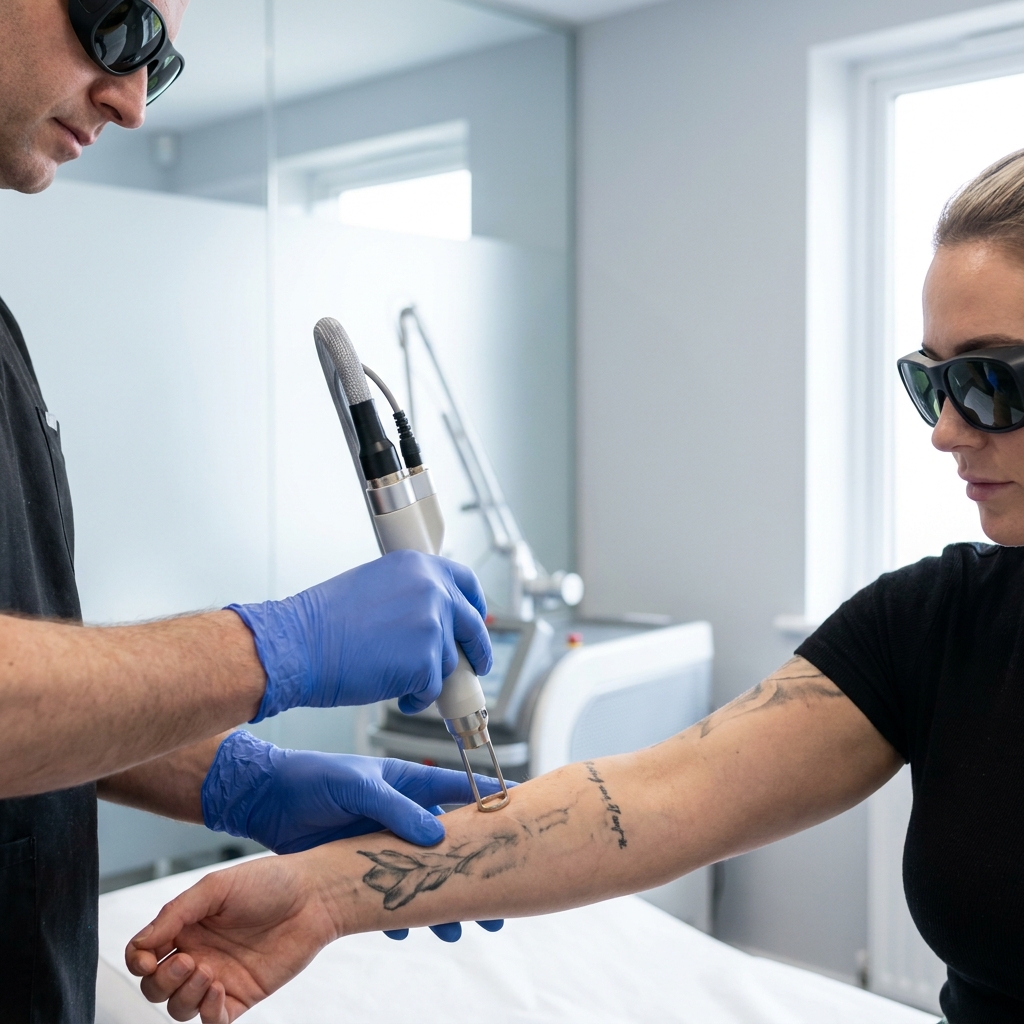
Removal uses a laser to fade or clear the existing tattoo, aiming for skin as close to its original state as possible. A cover-up keeps the skin tattooed but layers a new, usually larger and darker design over the old one to disguise it. They answer different questions: removal is for people who no longer want a tattoo there at all, while a cover-up is for people who want a different tattoo in the same spot. If you want clear skin, see does tattoo removal work for realistic expectations. It is worth being clear with yourself about the end goal, because that single decision shapes everything else — cost, timeline and how much the old ink matters.
Fading first: the best of both
One of the most useful facts is that you do not have to choose absolutely. A short course of laser sessions can lighten an old tattoo enough that a tattoo artist has a far easier canvas to work on, allowing a smaller, more detailed or lighter-coloured cover-up than the original ink would otherwise permit. Without fading, an artist often has to go very dark and large to hide an existing piece; with a few sessions of lightening, far more subtle designs become possible. This partial approach is covered in partial tattoo removal and removal before a cover-up. It usually needs fewer sessions than full removal because the goal is fading, not clearance.
| Factor | Full removal | Cover-up |
|---|---|---|
| End result | Bare skin (not guaranteed) | New tattoo |
| Time | Course of months | Faster |
| Old ink showing | Aim to clear it | Must be disguised |
| Design freedom | Total — no tattoo after | Limited by old ink |
Cost and time trade-offs
Removal is a course, so it spreads cost and time over many months — typically 6–12 sessions at roughly £50–£200 each depending on size, with a small tattoo often totalling £200–£600 and larger pieces £1,000 or more. A cover-up is a tattooing job priced by the artist and usually completed in far fewer sittings, though a skilled cover-up artist may not be cheap either. Fading-before-cover sits in between, adding a few laser sessions to the cover-up cost while keeping the new design more flexible. Our guides on tattoo removal cost and whether it is worth it help you budget realistically.
- Want it gone: choose removal and accept it is a longer course of 6–12 sessions.
- Want a new design: a cover-up may suit, especially if the old ink is light.
- Old ink is dark or dense: fade with a few laser sessions first for more freedom.
- On a budget or timeline: weigh the slower cost of a course against a faster cover-up.
Position matters too: a tattoo on a highly visible area such as the hands or neck may push you towards removal for a clean look, while a piece you simply want to update may be ideal for a cover-up. There is no single right answer — it depends entirely on what you want the skin to look like in a year’s time.
How to decide
The decision rests on your end goal, the darkness and colour of the existing ink, your budget and your timeline. A laser practitioner can advise on removal or fading, while a tattoo artist can advise on what a cover-up could realistically look like over your specific tattoo. Many people consult both and then agree a plan between them — for example, three or four fading sessions before a new design. Allow your skin to heal fully between any laser work and a new tattoo, and never rush the sequence. This page is general information, not medical advice; results vary by individual and complete removal cannot be guaranteed.
Frequently asked questions
Should I remove or cover up my old tattoo?
It depends on your goal. Choose removal for bare skin, a cover-up for a new design, or fade with a few laser sessions first to give a tattoo artist a lighter canvas.
Is fading before a cover-up worth it?
Often, yes. A few laser sessions can lighten dark or dense ink enough to allow a smaller, more detailed cover-up than the original tattoo would otherwise permit.
Which is cheaper, removal or a cover-up?
A cover-up is usually completed faster and may cost less overall, while full removal spreads cost across a longer course. Fading-before-cover sits between the two.
Can any tattoo be covered up?
Many can, but very dark, dense or large tattoos limit the cover-up options. Lightening the old ink with laser first widens what a tattoo artist can achieve.
Sources & further reading
- NHS — Cosmetic procedures: tattoos and removal
- MHRA — laser and IPL device regulation
- JCCP — choosing a qualified practitioner
- British Medical Laser Association (BMLA) — clinical guidance
This guide is general information, not medical advice. A patch test and consultation with a qualified, regulated practitioner are essential before treatment, and results vary by individual. Discuss any skin or health concerns with the practitioner or your GP.