The short answer
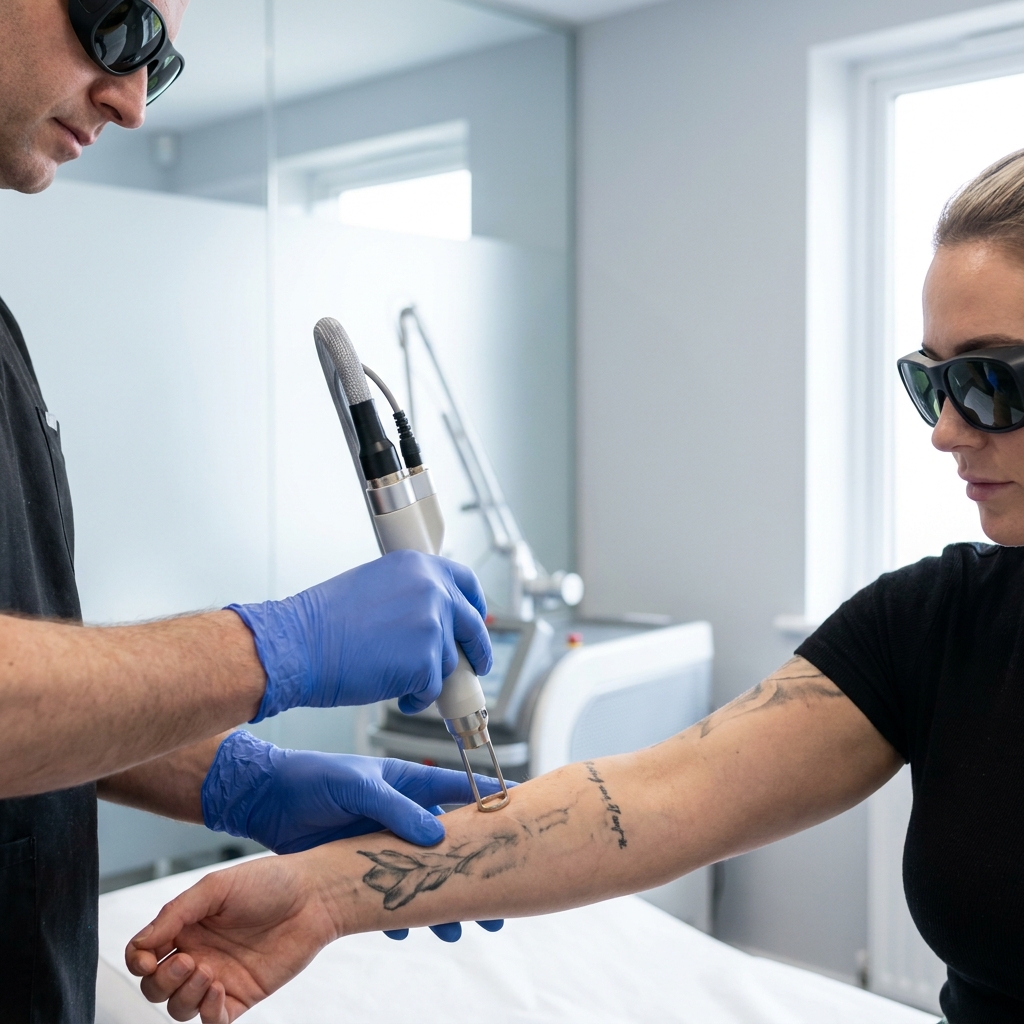
Laser tattoo removal is a clinic procedure that fades or clears a tattoo over a course of sessions. After a consultation and patch test, a practitioner passes a handheld laser over the tattoo; each pulse is absorbed by the ink, which fragments and is then cleared by your body. A session usually lasts minutes, feels like an elastic band snapping against the skin, and is repeated every 6–8 weeks.
If you have only ever seen tattoo removal in passing, the process can seem mysterious. In practice it is a structured clinical procedure with clear stages: assessment, patch test, the laser pass itself, then aftercare and gradual fading. This page walks through what a typical course of laser removal involves in the UK and what each stage is for.
A laser session at a glance
- Session length Often just a few minutes
- Sensation Like an elastic band snap
- Before treatment Consultation & patch test
- Frequency Every 6–8 weeks
- Aftercare Cooling, dressing, sun protection
- Course length Typically 6–12 sessions
Before the laser: consultation and patch test
A responsible clinic never starts with the laser. The first appointment is a consultation: the practitioner examines the tattoo, asks about your skin type, medical history and medications, and explains realistic expectations. They will look at the ink’s colour, age, density and position, and ask whether you have any conditions or medicines that affect healing or pigmentation. A patch test follows — a small test pulse on a discreet area — to see how your skin reacts before committing to full treatment. This step is essential, and our guide to the tattoo removal patch test explains why. The consultation is also when an honest practitioner will tell you if complete removal is unlikely for your particular ink, and roughly how many sessions to expect.
What the laser does
The device delivers extremely short, powerful pulses of light at a wavelength chosen to be absorbed by your tattoo’s ink. The ink heats instantly and fractures into tiny particles, which your immune system then clears over the following weeks. The fundamentals are covered in how tattoo removal works. The practitioner selects the wavelength, pulse duration and energy level to suit your ink colour and skin tone, which is why training and proper equipment matter so much. The same machine set up wrongly can cause unnecessary skin damage, so the operator’s skill is at least as important as the device itself.
- Eye protection: you and the practitioner wear protective goggles throughout.
- Cooling: many clinics use a chilled-air device or cold pack to ease discomfort.
- The pass: the laser is moved methodically across the whole tattoo.
- Frosting: a temporary white frost may appear on the skin as the ink reacts — this is normal and fades within minutes.
How a session feels and how long it lasts
Most people describe the sensation as similar to an elastic band snapping against the skin, or hot specks of fat from a frying pan. It is uncomfortable but brief. A small tattoo may take only a minute or two; a larger piece takes longer, though even a sizeable design is usually lasered within several minutes. Numbing cream or local cooling can help, and some clinics offer these options as standard. Pain tolerance varies from person to person and by body area — bonier, thinner-skinned spots tend to sting more — so see does tattoo removal hurt for a fuller answer.
| Stage | What happens |
|---|---|
| Consultation | Assessment, medical history, expectations |
| Patch test | Small test pulse to check skin reaction |
| Treatment | Goggles on, laser passes over tattoo |
| Aftercare | Cooling, dressing, sun protection advice |
| Repeat | Next session in 6–8 weeks |
After the session
Immediately afterwards the area may be red, swollen and tender, and blisters or scabs can form over the following days. This is part of normal healing rather than a sign that something has gone wrong. Good aftercare — keeping the area clean, not picking scabs and protecting it from the sun — reduces the risk of scarring and pigment change. Our aftercare guide covers this in detail, including how long the skin takes to settle between sessions. You then wait several weeks before the next session so the body can clear the broken-down ink.
Across the whole course
Because each session only fragments part of the ink, the tattoo lightens gradually across the course rather than disappearing at once. Most tattoos need 6–12 sessions, spaced 6–8 weeks apart, so the full process commonly runs a year or more. The deepest and most stubborn ink — particularly greens, light blues and yellows — tends to be the last to fade, and some colours may never clear completely. Your practitioner will review progress as you go and adjust settings, and may revise the estimated number of sessions up or down based on how your skin responds.
This page is general information, not medical advice. Discuss your skin, your tattoo and any health conditions with a qualified practitioner before booking, and read our notes on whether tattoo removal is safe. Results vary by individual, and complete removal cannot be guaranteed.
Frequently asked questions
How long does one session take?
A small tattoo may take only a minute or two of actual lasering; larger pieces take longer. The whole appointment, including preparation and aftercare advice, is usually under half an hour.
Will I see results after the first session?
You may notice some lightening, but visible fading builds gradually across the course. Each session breaks down more ink, which your body then clears over several weeks.
Do I need anything done before treatment?
Yes — a consultation and patch test. The practitioner checks how your skin reacts and sets realistic expectations before committing to a full session.
Can the laser damage my skin?
Risks include blistering, temporary or lasting pigment change and, rarely, scarring. A trained practitioner at a regulated clinic using correct settings and aftercare minimises these risks.
Sources & further reading
- NHS — Cosmetic procedures: laser and light treatments
- MHRA — Lasers, IPL and LED devices guidance
- Healthcare Improvement Scotland (HIS) — independent clinic regulation
- JCCP — choosing a practitioner
This guide is general information, not medical advice. A patch test and consultation with a qualified, regulated practitioner are essential before treatment, and results vary by individual. Discuss any skin or health concerns with the practitioner or your GP.