The short answer
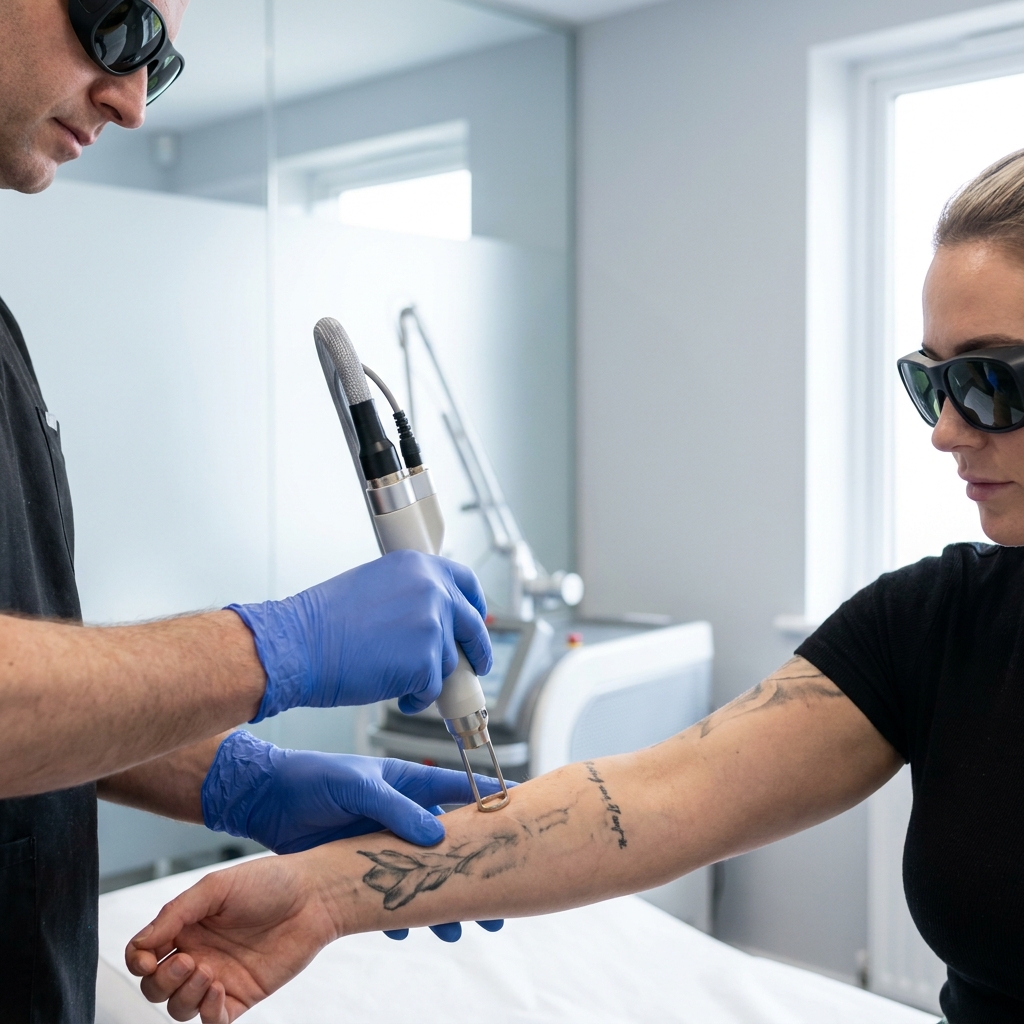
Nanosecond (Q-switched) and picosecond lasers are the two established technologies for tattoo removal. Both shatter ink with ultra-short light pulses; the difference is speed — picosecond lasers fire in trillionths of a second versus billionths for nanosecond. Picosecond can break pigment into finer fragments and may help with stubborn colours or fewer sessions, but a skilled practitioner and the right wavelength matter more than the badge on the machine.
You will see clinics advertise “picosecond” lasers as a premium option over older “Q-switched” nanosecond machines. Both are legitimate, proven technologies. This page explains the real difference between them, what it means in practice and why the operator matters as much as the device.
The two laser types at a glance
- Nanosecond Q-switched; pulses in billionths of a second
- Picosecond Pulses in trillionths of a second
- Both Shatter ink for the body to clear
- Picosecond edge Finer fragments, stubborn colours
- What matters most Wavelength and operator skill
- Sessions Still typically 6–12
What the names actually mean
The names describe pulse duration — how long each burst of laser light lasts. A nanosecond is one billionth of a second; a picosecond is one thousand times shorter still, a trillionth of a second. Q-switched lasers fire in nanoseconds and have been the standard for tattoo removal for decades, with a long track record behind them. Picosecond lasers are the newer generation, firing far faster. Both rely on the same basic principle of delivering energy quickly enough to fragment ink rather than heat the surrounding skin — explained in how lasers break down ink. Neither is “experimental”; both are well-established clinical tools.
Why pulse speed matters
The shorter the pulse, the more the effect on the ink shifts from purely thermal (heating) towards photomechanical (a shockwave that physically shatters the particle). In theory, a picosecond pulse breaks pigment into smaller fragments, which the immune system may clear more efficiently and with less heat spread into the surrounding skin. In practice this can translate into better results on certain stubborn colours and, for some tattoos, fewer sessions — though this is not guaranteed and depends heavily on the individual, the ink and the skill of the operator. Marketing claims of dramatically fewer sessions should be treated with healthy caution.
| Feature | Nanosecond (Q-switched) | Picosecond |
|---|---|---|
| Pulse length | Billionths of a second | Trillionths of a second |
| Track record | Decades of use | Newer generation |
| Fragment size | Effective | Often finer |
| Stubborn colours | Can struggle | May respond better |
| Availability | Widespread | Less widespread, often pricier |
Wavelength matters as much as speed
Both laser types come in different wavelengths, and matching the wavelength to the ink colour is critical — different pigments absorb different wavelengths. A versatile clinic offers multiple wavelengths so it can target black, red and other colours appropriately. A picosecond machine with the wrong wavelength will not outperform a well-matched nanosecond laser. This is why the question is rarely simply “pico or nano” but “which device and settings suit my specific ink”.
- Black ink: responds well to both types and is the most reliably cleared.
- Green and light blue: often easier with specific wavelengths, where picosecond may help.
- Red and orange: usually respond to particular wavelengths chosen for warm tones.
- Skin tone: influences safe settings regardless of laser type — see removal on different skin tones.
The practical lesson is that a clinic offering several wavelengths, and a practitioner who can explain which they will use for each colour in your tattoo, is more reassuring than one simply boasting about owning a picosecond machine.
Cost and availability
Picosecond machines are more expensive for clinics to buy and run, and that cost is often reflected in the price of a session. They are also less widespread than Q-switched lasers, so availability varies by area. None of this means picosecond is the right choice for every tattoo; it means the decision should weigh the likely benefit for your specific ink against the price, rather than assuming newer is always better.
Which should you choose?
For many tattoos, especially black ink, a well-operated Q-switched laser does an excellent job and a course still typically runs to 6–12 sessions. Picosecond may have an edge for stubborn colours or for reducing session numbers, but it often costs more and is not always necessary. The right answer comes from a consultation where a qualified practitioner assesses your ink and skin and explains which device and wavelengths they would use and why. See our overview of tattoo removal machine types for the wider picture. This page is general information, not medical advice; results vary by individual and complete removal cannot be guaranteed.
Frequently asked questions
Is a picosecond laser always better?
Not necessarily. It can break ink into finer fragments and may help with stubborn colours or fewer sessions, but a well-operated Q-switched laser performs excellently on many tattoos, especially black ink.
What is a Q-switched laser?
Q-switched is the nanosecond laser type that has been the standard for tattoo removal for decades. It fires extremely short, high-energy pulses that shatter ink for the body to clear.
Will a picosecond laser mean fewer sessions?
Sometimes, for certain tattoos and colours, but it is not guaranteed. Session numbers depend on ink colour, depth, age and your skin, not just the laser type.
Does the laser type matter more than the practitioner?
No. Choosing the correct wavelength and settings, and operating safely, matters more than whether the device is picosecond or nanosecond. Practitioner skill is decisive.
Sources & further reading
- MHRA — Regulation of lasers and IPL devices
- NHS — Laser and light treatments
- British Medical Laser Association (BMLA) — laser technology guidance
- JCCP — standards for laser practitioners
This guide is general information, not medical advice. A patch test and consultation with a qualified, regulated practitioner are essential before treatment, and results vary by individual. Discuss any skin or health concerns with the practitioner or your GP.