The short answer
No — “natural” tattoo removal methods do not work, and several are dangerous. Removal creams, salt or sand abrasion (salabrasion), lemon juice, and DIY kits cannot reach the ink, which sits deep in the dermis. At best they do nothing; at worst they cause chemical burns, infection, scarring and pigment change. Laser removal by a qualified practitioner is the only proven, safe route. This page is general information, not medical advice.
Search online and you will find endless “natural” tattoo removal hacks — creams, salt scrubs, lemon juice, even sandpaper. They are appealing because they sound cheap and gentle. In reality they range from useless to genuinely harmful. This page explains why, and what to do instead.
The myths at a glance
- Removal creams Cannot reach dermal ink
- Salt / salabrasion Wounds skin, doesn’t clear ink
- Lemon / acids Ineffective, can burn
- DIY laser pens Unregulated and unsafe
- Real result Burns, infection, scarring
- Proven route Laser by a qualified practitioner
Why “natural” methods fail
The single fact that debunks every home remedy is depth. Tattoo ink is deposited in the dermis, the second layer of skin, well below the surface — that is precisely why tattoos are permanent and do not simply wash off. A cream, juice or scrub applied to the surface simply cannot reach pigment that deep. Anything that did reach it would have to destroy the overlying skin to get there, which is exactly why these methods are dangerous rather than gentle. The proper mechanism — light fragmenting the ink so the body can clear it — is explained in how tattoo removal works, and there is no kitchen-cupboard shortcut to it.
Removal creams
Tattoo removal creams are marketed heavily but cannot clear ink. They work, if at all, by mildly bleaching or peeling the upper skin, never reaching the dermal pigment where the tattoo actually lives. Some contain harsh acids such as trichloroacetic acid that cause irritation, chemical burns or pigment change, and a few are sold with little information about what they contain. At best they waste your money; at worst they damage your skin. They are not a substitute for laser and can leave the area looking worse than before while the tattoo itself remains entirely in place.
Salt abrasion (salabrasion) and sanding
Salabrasion — rubbing salt into abraded skin — and DIY sanding aim to physically wear away inked tissue. They do this by wounding the skin, with a high risk of infection, scarring and permanent pigment change, and without reliably removing the ink. To reach dermal pigment you would have to abrade through healthy skin, which is why this almost always scars. This is an old, abandoned approach for good reason, and no reputable practitioner recommends it.
- Lemon juice / vinegar: acidic, ineffective on deep ink, can irritate or burn.
- Hydrogen peroxide: a surface bleach; does not reach dermal pigment.
- Sand / pumice scrubs: wound the skin, risk scarring, do not clear ink.
- DIY “laser” pens: unregulated devices unsuitable and unsafe for home use.
- Aloe, honey and herbal pastes: may soothe skin but do nothing to the ink itself.
| Method | Claim | Reality |
|---|---|---|
| Removal cream | Fades ink | Can’t reach dermis; burn risk |
| Salt abrasion | Sands ink away | Wounds skin, scarring risk |
| Lemon juice | Lightens tattoo | Ineffective, can irritate |
| DIY laser pen | Home removal | Unregulated, unsafe |
Why these myths persist
Home remedies endure because they sound cheap, gentle and natural, and because the internet rewards bold before-and-after claims. But “natural” does not mean safe — salt, acid and abrasion are perfectly capable of injuring skin — and none of these methods addresses the basic problem that the ink is out of reach. If a method genuinely removed deep ink without a laser or surgery, it would be in every clinic; the fact that it is not tells you what you need to know.
What to do instead
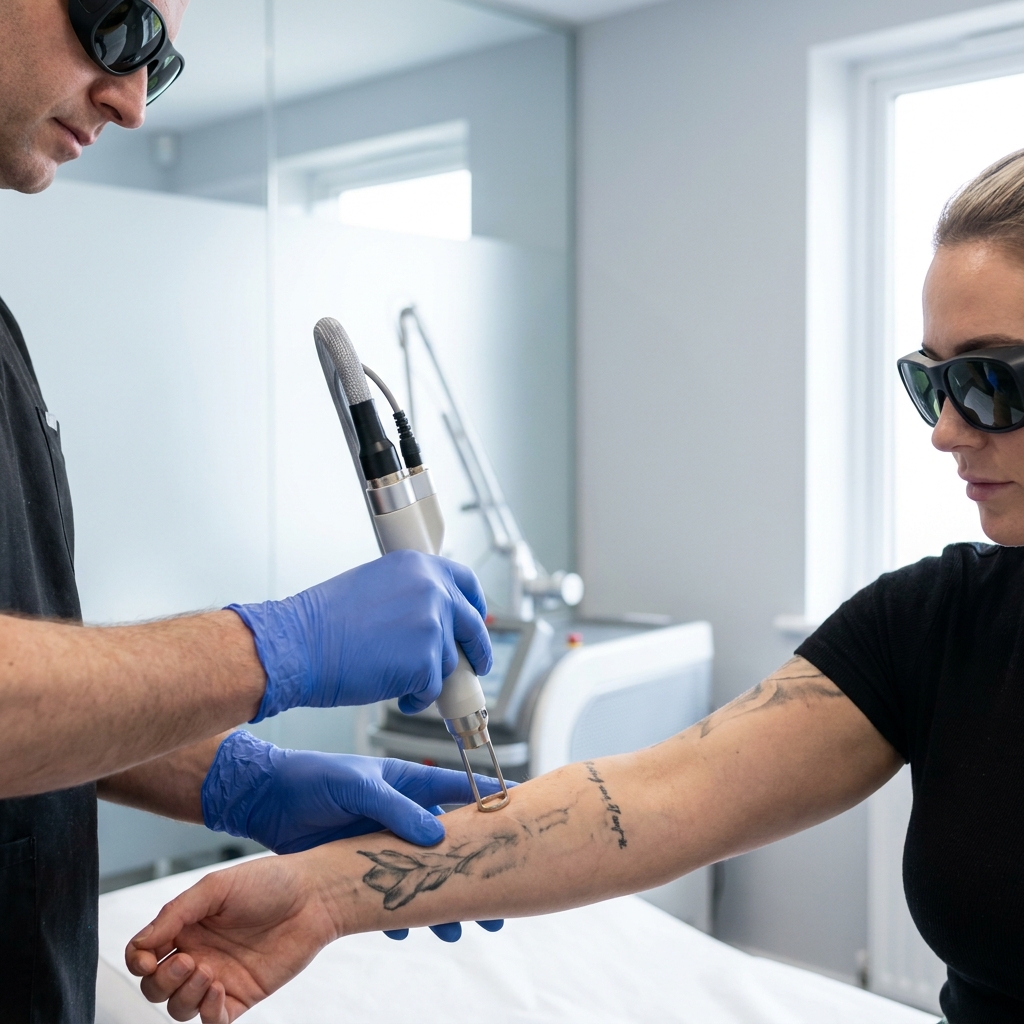
If you want a tattoo faded or removed, the only proven, safe route is laser treatment by a qualified practitioner at a regulated clinic, after a consultation and patch test. It costs more than a bottle of cream — typically £50–£200 per session across a course — but it actually works and is far safer. See types of tattoo removal for the recognised methods and choosing a clinic for what to look for. This page is general information, not medical advice; results vary by individual and complete removal cannot be guaranteed.
Frequently asked questions
Do tattoo removal creams actually work?
No. Tattoo ink sits in the dermis, deeper than any cream can reach. Removal creams do not clear ink and some contain acids that cause irritation, burns or pigment change.
Is salt abrasion (salabrasion) safe?
No. Rubbing salt into abraded skin wounds the skin, risks infection, scarring and pigment change, and does not reliably remove ink. It is an abandoned method for good reason.
Can lemon juice fade a tattoo?
No. Lemon juice is acidic and cannot reach dermal ink. At best it does nothing; at worst it irritates or burns the skin without lightening the tattoo.
What should I use instead of natural methods?
Laser removal by a qualified practitioner at a regulated clinic, following a consultation and patch test. It is the only proven, safe way to fade or remove a tattoo.
Sources & further reading
- NHS — Tattoo removal and skin safety
- CIEH — Chartered Institute of Environmental Health: skin treatment safety
- MHRA — regulation of removal devices
- JCCP — qualified practitioner guidance
This guide is general information, not medical advice. A patch test and consultation with a qualified, regulated practitioner are essential before treatment, and results vary by individual. Discuss any skin or health concerns with the practitioner or your GP.