The short answer
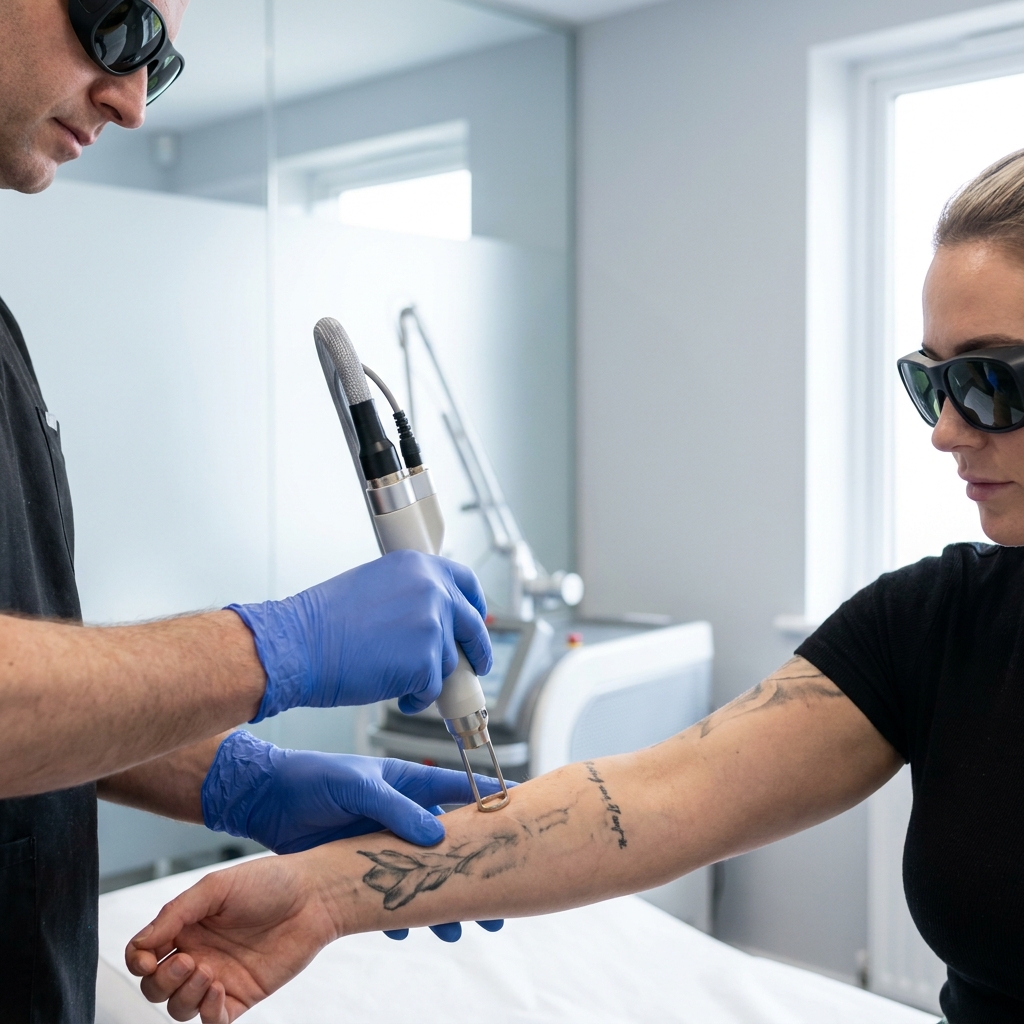
Fading a tattoo with a few laser sessions usually gives a tattoo artist a much better base for a cover-up. You typically need fewer sessions than full removal, because the old ink only has to be lightened, not erased. A faded tattoo gives the artist more freedom over colours and design and reduces the old ink showing through. Your artist and a laser practitioner should agree how much fading is needed.
A cover-up tattoo has to hide what is underneath, and that is far easier when the old ink has been lightened first. Many people combine a short course of laser fading with new work to get a cleaner, more flexible result. This page explains why fading helps, how it differs from full removal, and how to coordinate the two.
Fading for cover-up at a glance
- Goal Lighten, not erase
- Sessions Usually fewer than full removal
- Benefit More design and colour freedom
- Coordination Artist + laser practitioner
- Spacing Still 6–8 weeks apart
Why fading first helps a cover-up
A cover-up artist has to work around the old tattoo — its darkness, its colours and its shapes all limit what the new design can be. Dark ink underneath tends to show through lighter new work, which is why cover-ups done straight over an existing tattoo are often large, dark and busy by necessity. Lightening the original with a few laser sessions removes much of that constraint, giving the artist a cleaner canvas and far more freedom over colour, style and composition. A cover-up over a faded base can be smaller, lighter and more detailed than one forced to hide solid ink. The choice between covering and removing is compared on tattoo removal vs cover-up.
Fewer sessions than full removal
This is the key advantage: you only need to lighten the tattoo, not remove it. Because the old ink can still be partly present under the new design, fading for a cover-up generally needs fewer sessions than complete removal. That usually means lower cost and a shorter overall timeline than committing to clearing the tattoo entirely. How many sessions you need depends on how dark and dense the original is and what the new design requires — covered on how many sessions.
| Fade for cover-up | Full removal | |
|---|---|---|
| Goal | Lighten enough for new ink | Clear the tattoo |
| Typical sessions | Usually fewer | Often 6–12 or more |
| End point | Set by the cover-up design | As clear as achievable |
| Cost | Usually lower | Higher across the course |
Coordinating laser and artist
The best results come from the laser practitioner and tattoo artist working together. Your artist can advise how much the old tattoo needs to fade for the planned cover-up — a dark, simple cover may need little fading, while a lighter or more detailed design needs more. The practitioner then plans a course to reach that point rather than chasing complete clearance. Steps to coordinate:
- Discuss the cover-up design first — so you know how much fading is needed.
- Have a laser consultation and patch test — see patch test.
- Allow the standard spacing — sessions still need 6–8 weeks between them.
- Let the skin fully recover before the new tattoo goes on.
How much fading is enough?
You rarely need the old tattoo to vanish completely before a cover-up — you need it light enough that it will not show through the new design. The right amount of fading is a judgement your tattoo artist makes based on the cover-up they plan: darker, denser cover-ups can sit over more remaining ink, while delicate or pale designs need the base lifted further. This is why involving the artist early saves both time and money, preventing unnecessary extra laser sessions or a cover-up that struggles to hide what is underneath.
Is fading worth it for you?
If you like the idea of a fresh design rather than bare skin, fading for a cover-up can be a quicker, cheaper route than full removal — and gives a better cover-up than tattooing straight over dark ink. It also keeps your options open: once the old tattoo is lightened, you can still decide to continue to full removal instead of covering it, if you change your mind. If you would rather have no tattoo at all from the outset, full removal is the goal instead; weigh it up on is tattoo removal worth it. This page is general information, not medical advice; a consultation with both a qualified laser practitioner and your tattoo artist is the best way to plan it.
Frequently asked questions
How many sessions to fade a tattoo for a cover-up?
Usually fewer than full removal, because you only need to lighten the ink. The number depends on how dark the original is and what the new design requires — a practitioner can estimate at consultation.
Is fading better than covering straight over the old tattoo?
Often, yes. Lightening the old ink first reduces show-through and gives the artist more freedom over colour and design, usually producing a cleaner cover-up.
How long after laser can I get the cover-up?
Not immediately — the skin must fully recover after the final laser session before being tattooed again. Your practitioner and artist will advise on timing.
Will the old tattoo still show through after fading?
Lightening greatly reduces show-through, but some faint old ink may remain under the new design. How much fading you need depends on the cover-up your artist plans.
Sources & further reading
- NHS — Laser and intense pulsed light (IPL) treatments
- NHS — Tattoos: looking after a tattoo and possible problems
- MHRA — Lasers, intense light source systems and LEDs: guidance
- NHS — Cosmetic procedures: things to consider before you go ahead
This guide is general information, not medical advice. A patch test and consultation with a qualified, regulated practitioner are essential before treatment, and results vary by individual. Discuss any skin or health concerns with the practitioner or your GP.