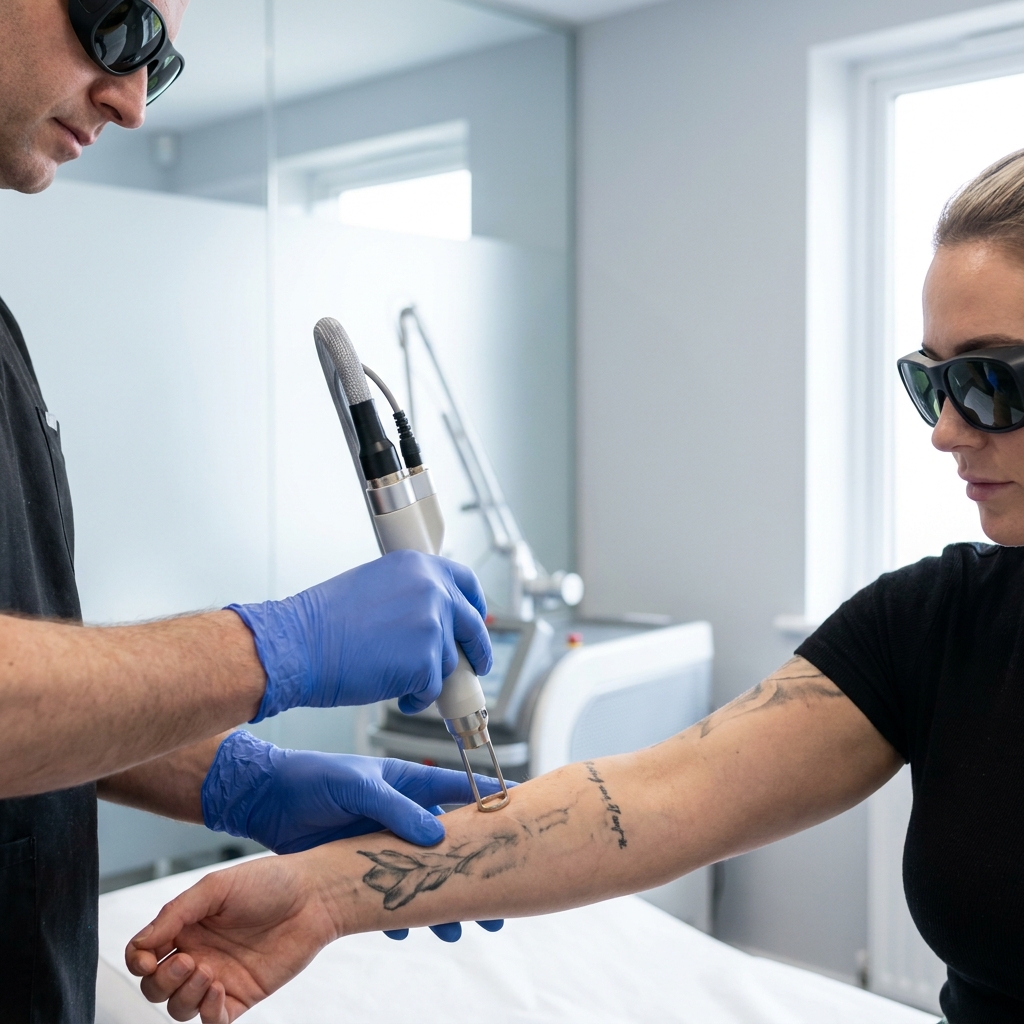
The short answer
The skin surface usually heals within one to two weeks after each session, while sessions are spaced 6–8 weeks apart. Redness and swelling settle within days; blisters, scabs and flaking resolve over one to two weeks. The deeper work — your body clearing the shattered ink — continues for weeks between sessions, which is why the gap matters. Healing speed varies with body area, skin type and aftercare. Faster healing is not always better; the spacing protects your skin.
Tattoo removal healing happens on two timescales: the visible recovery of the skin surface, and the slower, invisible work of your immune system flushing away fragmented ink. Both matter, and rushing either is counterproductive. This page sets out a realistic week-by-week picture so you know what normal healing looks like and why patience between sessions is part of the treatment.
Healing time at a glance
- Surface healing Usually 1–2 weeks
- Redness/swelling Hours to a few days
- Blisters and scabs Resolve within 1–2 weeks
- Between sessions 6–8 weeks
- Ink clearance Continues for weeks after
- Varies with Area, skin type, aftercare
The two timescales of healing
It helps to separate two things. First, the skin surface — the redness, swelling, blisters and scabs — which generally heals within one to two weeks. Second, the ink clearance: once the laser shatters the pigment into tiny particles, your immune system gradually carries them away over the following weeks. That second process is why tattoos fade between appointments rather than disappearing instantly, and why sessions are spaced rather than stacked together. The 6–8 week gap lets both the skin and the deeper clearance complete before the next pass. Treating again too soon does not speed up the result; it simply lands on skin that has not finished recovering, raising the chance of side effects.
A typical timeline after one session
Although every person heals at their own pace, a common pattern looks like this:
| Time | What usually happens |
|---|---|
| First 24–72 hours | Redness, swelling, possible blistering and frosting |
| Days 3–7 | Scabs form, area starts to settle |
| Week 1–2 | Scabs flake away, surface heals over |
| Weeks 2–8 | Body clears shattered ink; tattoo fades |
| Week 6–8 | Skin recovered — next session |
This is a guide, not a guarantee. Areas with a good blood supply, such as the upper body, often heal faster; extremities such as ankles, feet and fingers tend to heal more slowly because circulation there is poorer. The total number of sessions and the overall length of a course are covered in how long removal takes, but most people need 6–12 sessions, sometimes more for stubborn ink.
What helps you heal well
- Follow your aftercare precisely and keep the area clean and dry.
- Leave blisters and scabs alone — picking delays healing and risks scarring.
- Protect the area from the sun and avoid sunbeds throughout your course.
- Avoid swimming, saunas and heavy sweating until the area has healed.
- Respect the 6–8 week gap rather than asking to be treated sooner.
- Keep generally well — rest, hydration and not smoking all support skin repair.
When healing is slower than expected
Healing varies with the body area, your skin type, your age, your general health and how closely you follow aftercare. Some sessions heal quickly and others take a little longer, and that variation is normal. If an area is not healing within the expected window, or you see signs of infection — spreading redness, increasing pain, pus or fever — contact a pharmacist, your practitioner or your GP rather than waiting.
How healing affects the overall course
Because the skin needs time to recover and the body needs time to clear the broken-down ink, healing is not a delay to the treatment — it is part of how the treatment works. Each session removes a little more pigment, and the fading you see is the result of the weeks of clearance that follow, not the few minutes under the laser. This is why a full course typically spans many months rather than weeks, and why patience is rewarded with a better, safer result. If you have an event or holiday coming up, it is worth planning sessions around it, since you will want the skin healed and unexposed to the sun beforehand. Talk to your practitioner about timing at the start so your expectations match the realistic pace of healing. This page is general information, not medical advice; healing times vary by individual, so use your clinic’s specific guidance and raise any concerns at your next appointment or sooner if something looks wrong.
Frequently asked questions
How long does the skin take to heal after each session?
The skin surface usually heals within one to two weeks — redness settles in days, while scabs and blisters resolve over a week or two. Deeper ink clearance continues for weeks.
Why do I have to wait weeks between sessions?
The 6–8 week gap lets the skin fully recover and gives your immune system time to clear the shattered ink. Treating sooner raises side-effect risk without speeding results.
Does faster healing mean better results?
Not necessarily. Healing speed depends on area, skin type and aftercare. The spacing between sessions protects your skin and is part of effective, safe treatment.
What if my skin isn’t healing as expected?
If healing is unusually slow or you see spreading redness, pain, pus or fever, contact a pharmacist, your practitioner or your GP, as these can indicate infection.
Sources & further reading
- NHS — Laser and intense pulsed light (IPL) treatments
- NHS — How wounds heal and how to care for them
- NHS — Skin infections and when to get help
- British Medical Laser Association (BMLA) — Treatment and recovery information
This guide is general information, not medical advice. A patch test and consultation with a qualified, regulated practitioner are essential before treatment, and results vary by individual. Discuss any skin or health concerns with the practitioner or your GP.