The short answer
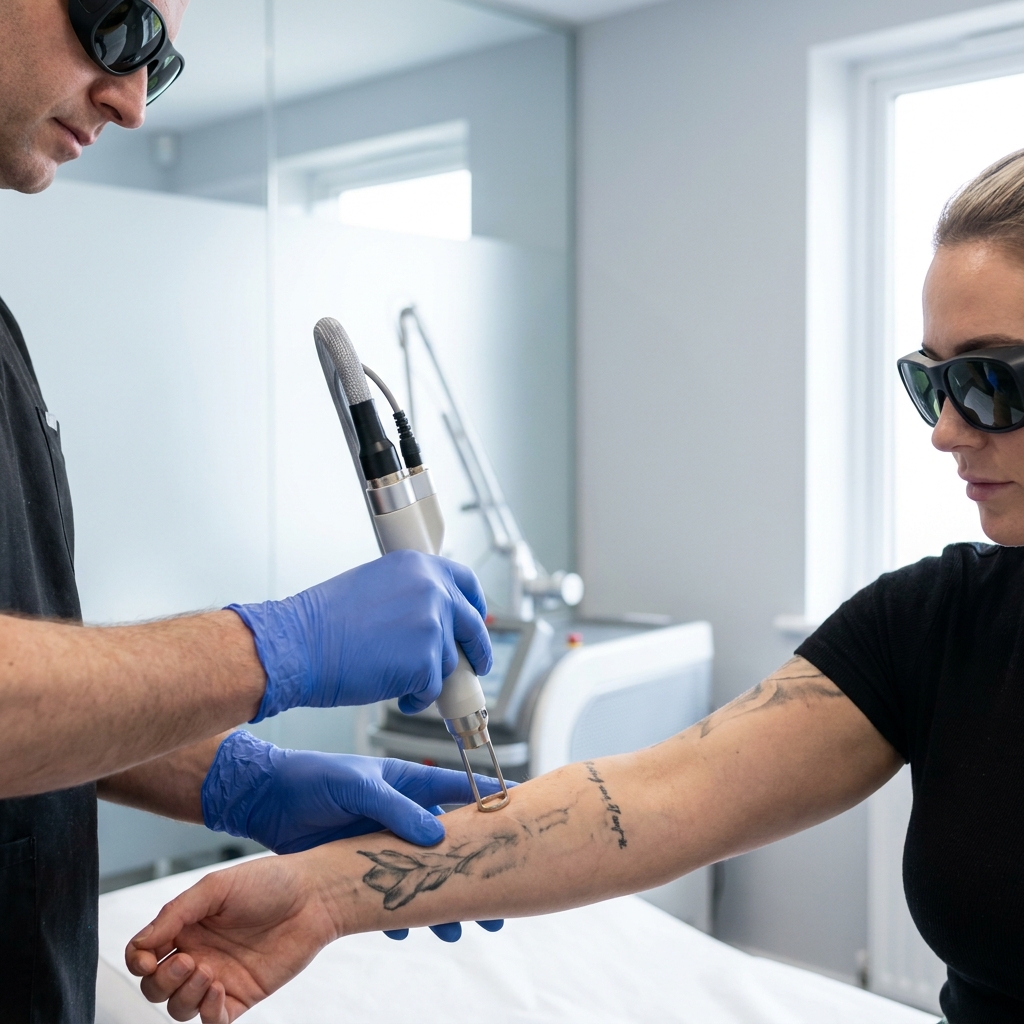
Ink colour is the single biggest factor in how well a tattoo clears. Black absorbs all laser wavelengths and responds best, followed by dark blue. Reds, oranges and purples are moderate. Green, light blue and yellow are the most stubborn, may need more sessions, and sometimes do not fully clear. Multicoloured tattoos often need a laser system that produces several wavelengths to target the different inks.
If you ask a laser practitioner which tattoos are easiest to remove, the answer almost always starts with colour. Each laser wavelength is absorbed by some pigments and reflected by others, so a tattoo’s palette largely decides how many sessions it needs — and whether complete clearance is realistic. This page explains how the common ink colours behave under the laser.
Ink colours at a glance
- Best response Black, dark blue
- Moderate Red, orange, purple
- Hardest Green, light blue, yellow
- Why black wins Absorbs all wavelengths
- Multicolour need Multiple laser wavelengths
Why colour decides the outcome
A laser only removes ink it can be absorbed by. Each wavelength of laser light is taken up strongly by some pigments and bounced off others. When a pigment absorbs the energy well, it shatters into clearable fragments; when it reflects the light, little happens. That is why colour is the dominant factor in tattoo removal — more than size, and often more than age. A small, brightly coloured tattoo can genuinely be harder work than a large black one, which is the opposite of what most people expect. The underlying physics is covered in how lasers break down ink.
How the common colours respond
As a general guide for 2026 UK practice, inks fall into a rough order of difficulty, from the easiest to clear to the most stubborn:
- Black — absorbs all wavelengths and responds best; usually the fastest to fade.
- Dark blue — close behind black, generally clears well.
- Red, orange, purple — moderate; usually treatable but may need a specific wavelength.
- Green — stubborn; often needs a specialised wavelength and more sessions.
- Light blue and turquoise — difficult; can be slow to shift.
- Yellow — among the hardest; may fade only partially.
- White and some pastels — unpredictable and sometimes resistant.
These are general tendencies rather than fixed rules, because the exact chemistry of a given ink, how deep it sits and how densely it was applied all shift the response. Two green tattoos can behave differently if one was packed solid and the other applied lightly.
| Ink colour | Typical response |
|---|---|
| Black | Excellent — absorbs all wavelengths |
| Dark blue | Good |
| Red / orange / purple | Moderate |
| Green | Difficult — needs specific wavelength |
| Light blue / turquoise | Difficult |
| Yellow | Very difficult — may not fully clear |
Multicoloured tattoos need the right laser
A tattoo with several colours cannot be fully treated by a single wavelength. Modern Q-switched and picosecond systems can deliver more than one wavelength, allowing a practitioner to target black, red and green inks in turn. A clinic without the right wavelengths for your palette may clear the black but leave coloured areas behind, so it is worth asking what laser will be used and which wavelengths it produces — see tattoo removal machine types and questions to ask. If a clinic only has a single-wavelength device and your tattoo is colourful, the result may be disappointing through no fault of your skin.
A note on cosmetic and white ink
Cosmetic tattoo pigments — used in permanent make-up such as brows and lip liner — and white or flesh-toned inks behave unpredictably. Some contain compounds that can darken or change shade when lasered, an effect known as paradoxical darkening, which is one reason a patch test is essential before treating them. A qualified practitioner will assess the specific ink and may test a small, discreet area first to see how it reacts. The wider effect of colour on your overall result is summarised on black vs coloured tattoo removal and factors affecting tattoo removal.
It is also worth remembering that colour is only the starting point. A pale yellow line that was applied lightly may surprise you by fading reasonably, while a heavily packed block of supposedly easy colour can prove stubborn. The practitioner has to read your specific tattoo, not just its palette, and the patch test is the most honest guide of all because it shows your skin and your ink reacting to the actual laser being used.
This page is general information, not medical advice. Because the exact inks in your tattoo are rarely known — even your original tattooist may not recall the precise brand — only a consultation and patch test with a qualified practitioner can show how your colours will actually respond.
Frequently asked questions
Which tattoo colour is easiest to remove?
Black, because it absorbs every laser wavelength and fragments readily. Dark blue is usually next easiest. These tend to need the fewest sessions.
Why is green ink so hard to remove?
Green pigment only absorbs a narrow band of laser light, so it needs a specific wavelength and often more sessions. Even then, some green may remain.
Can all coloured tattoos be removed?
Not always completely. Many colours fade well, but green, light blue and yellow can be resistant. A practitioner with a multi-wavelength laser gives the best chance.
Will white or cosmetic ink remove cleanly?
These can react unpredictably and sometimes darken when lasered. A patch test is essential first so a practitioner can see how the specific pigment behaves.
Sources & further reading
- NHS — Laser and intense pulsed light (IPL) treatments
- MHRA — Lasers, intense light source systems and LEDs: guidance
- NHS — Cosmetic procedures: things to consider before you go ahead
- British Medical Laser Association (BMLA) — laser treatment information
This guide is general information, not medical advice. A patch test and consultation with a qualified, regulated practitioner are essential before treatment, and results vary by individual. Discuss any skin or health concerns with the practitioner or your GP.