The short answer
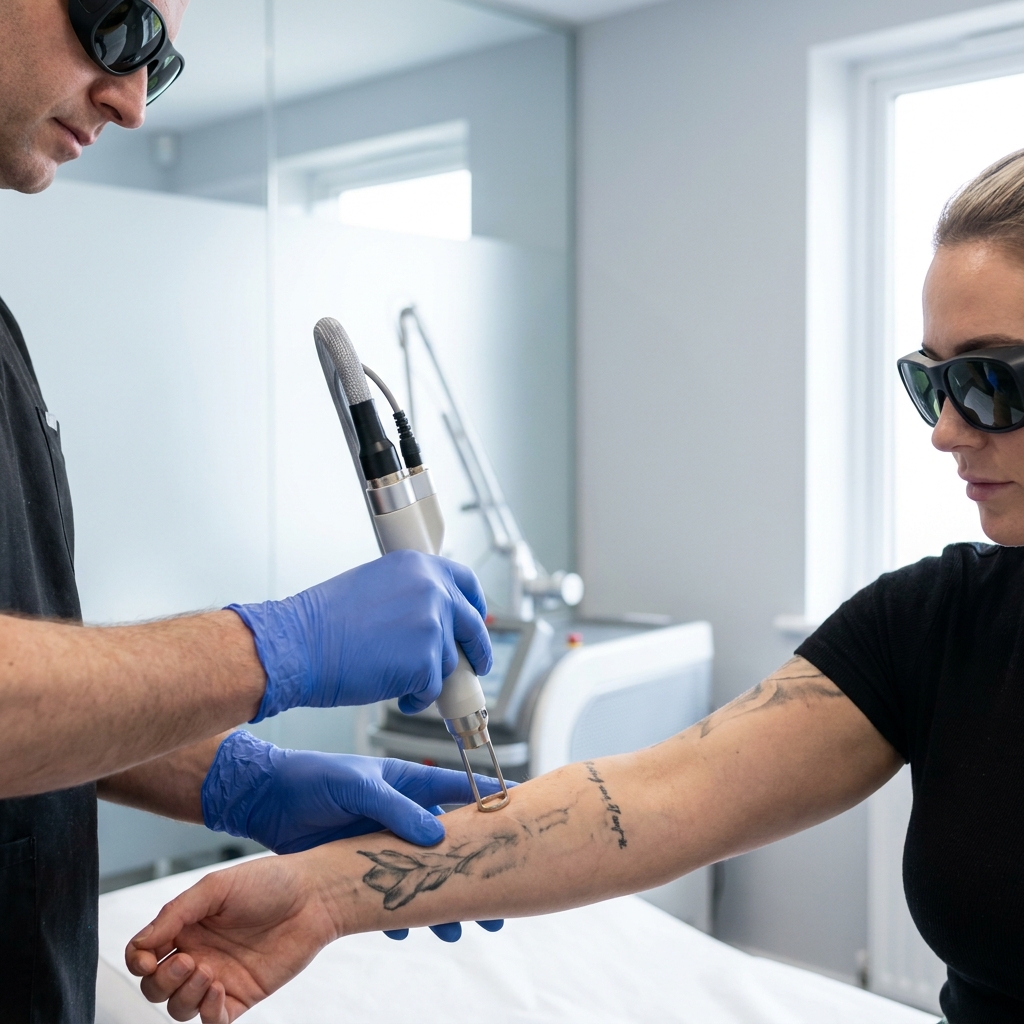
Yes — black ink is generally the easiest to remove because it absorbs all laser wavelengths. Coloured inks each absorb only certain wavelengths, so they often need more sessions and a laser that produces several wavelengths. Green, light blue and yellow are the most stubborn and may not fully clear. A simple black tattoo therefore tends to need fewer sessions and cost less than a multicoloured one of the same size.
When people compare quotes for removal, they are often surprised that a small colourful tattoo can be harder work than a larger black one. The reason is physics, not size: black behaves very differently under the laser to coloured pigment. This page compares the two head to head — sessions, cost and realistic outcome.
Black vs colour at a glance
- Black ink Absorbs all wavelengths — easiest
- Coloured ink Needs specific wavelengths
- Hardest colours Green, light blue, yellow
- Sessions Colour often needs more
- Laser needed Multi-wavelength for colour
Why black is the easiest colour
Black pigment absorbs light across the entire visible spectrum, so whatever wavelength a laser produces, black takes it up and shatters. That makes black tattoos the most predictable and usually the quickest to fade. Almost every Q-switched or picosecond laser can treat black effectively, which is why most clinics can offer it and why black work tends to be at the affordable end of the market. The wavelength-matching principle is explained on how lasers break down ink and the full colour ranking on tattoo ink colours and removal.
Why coloured ink is harder
Coloured pigments are selective: each one only absorbs a particular band of laser light and reflects the rest. To break down red, green and blue you need different wavelengths, which means the clinic must have a laser system capable of producing them. If it does not, coloured areas may barely shift no matter how many sessions you book. Green, light blue and yellow are the most resistant of all and can need many sessions — or may never clear completely. This is a physics limitation, not a reflection of the practitioner’s skill or your skin.
| Black tattoo | Coloured tattoo | |
|---|---|---|
| Wavelengths needed | Any — absorbs all | Specific to each colour |
| Typical sessions | Often fewer | Often more |
| Hardest elements | Dense, deep black | Green, light blue, yellow |
| Likely cost | Lower for the size | Higher for the size |
| Full clearance | More likely | Less certain |
What this means for sessions and cost
Because colour drives the number of sessions, a multicoloured tattoo usually needs more visits than a black one of the same size, and more sessions means higher total cost. Per-session prices in the UK typically run from around £50 to £200 depending on size, and a course commonly runs to 6–12 sessions — potentially more for stubborn colour. A small black tattoo might be a few hundred pounds across its course, while a similarly sized colourful one can cost noticeably more simply because it needs more visits. See how many sessions and tattoo removal cost for the full picture.
- Simple black tattoo — tends to need fewer sessions; full clearance more achievable.
- Black with grey shading — generally responds well.
- Multicoloured tattoo — needs a multi-wavelength laser and usually more sessions.
- Green, blue or yellow detail — may fade only partially even after a long course.
Does black always win?
Black is the easiest colour, but that does not make every black tattoo quick. A dense, deeply saturated black piece — thick blackwork or a heavily shaded design — still holds a lot of pigment and can take a full course. Conversely, a lightly applied coloured tattoo on a well-circulated area may respond better than expected. Colour sets the baseline, but depth, density, age and location all still apply, as set out on factors affecting tattoo removal.
Choosing what is realistic for you
If your goal is a cover-up rather than total removal, even a stubborn coloured tattoo may only need enough fading to take a new design — covered on tattoo removal before cover-up. If you want full clearance, a practitioner can tell you honestly how your particular palette is likely to respond and whether their laser is suited to it. It is far better to hear at the consultation that a green or yellow element may not fully clear than to discover it after paying for a long course. A reputable clinic will set that expectation up front. This page is general information, not medical advice; a consultation and patch test are essential to judge your individual tattoo.
Frequently asked questions
Is a black tattoo always easier than a coloured one?
Generally yes, because black absorbs all laser wavelengths. A dense or deep black tattoo can still take several sessions, but it is usually more predictable than colour.
How many more sessions does colour add?
It varies with the specific colours and laser used. Stubborn greens, blues and yellows can need noticeably more sessions, and some may not clear completely.
Does coloured removal cost more?
Often, because more sessions are usually needed and per-session pricing is similar. A multicoloured tattoo therefore tends to cost more than a black one of the same size.
Can a clinic remove colour my laser left behind?
Possibly, if they have a laser producing the right wavelengths for those colours. A consultation will confirm whether further fading is realistic.
Sources & further reading
- NHS — Laser and intense pulsed light (IPL) treatments
- MHRA — Lasers, intense light source systems and LEDs: guidance
- NHS — Cosmetic procedures: things to consider before you go ahead
- British Medical Laser Association (BMLA) — laser treatment information
This guide is general information, not medical advice. A patch test and consultation with a qualified, regulated practitioner are essential before treatment, and results vary by individual. Discuss any skin or health concerns with the practitioner or your GP.