The short answer
A single laser session typically costs £50–£200, mostly depending on the size of the tattoo. Small designs sit at the lower end, larger pieces at the top. Some clinics charge a flat fee, others price by area or per minute, and consultations or patch tests may be separate. Because you need a course of 6–12 sessions, the per-session price matters less than the total — a cheap session can cost more overall if it takes more visits.
The per-session price is the figure clinics advertise, but it is only one input into what you ultimately pay. Knowing how clinics price a single visit — flat fee, by size, or by time — helps you compare quotes honestly and avoid being drawn in by a low headline rate that hides a longer, costlier course.
Per-session cost at a glance
- Typical single session £50–£200
- Small tattoo Lower end of range
- Large tattoo Upper end of range
- Pricing models Flat, by area, or per minute
- Consultation Sometimes charged separately
- Sessions in a course Usually 6–12
What one session costs
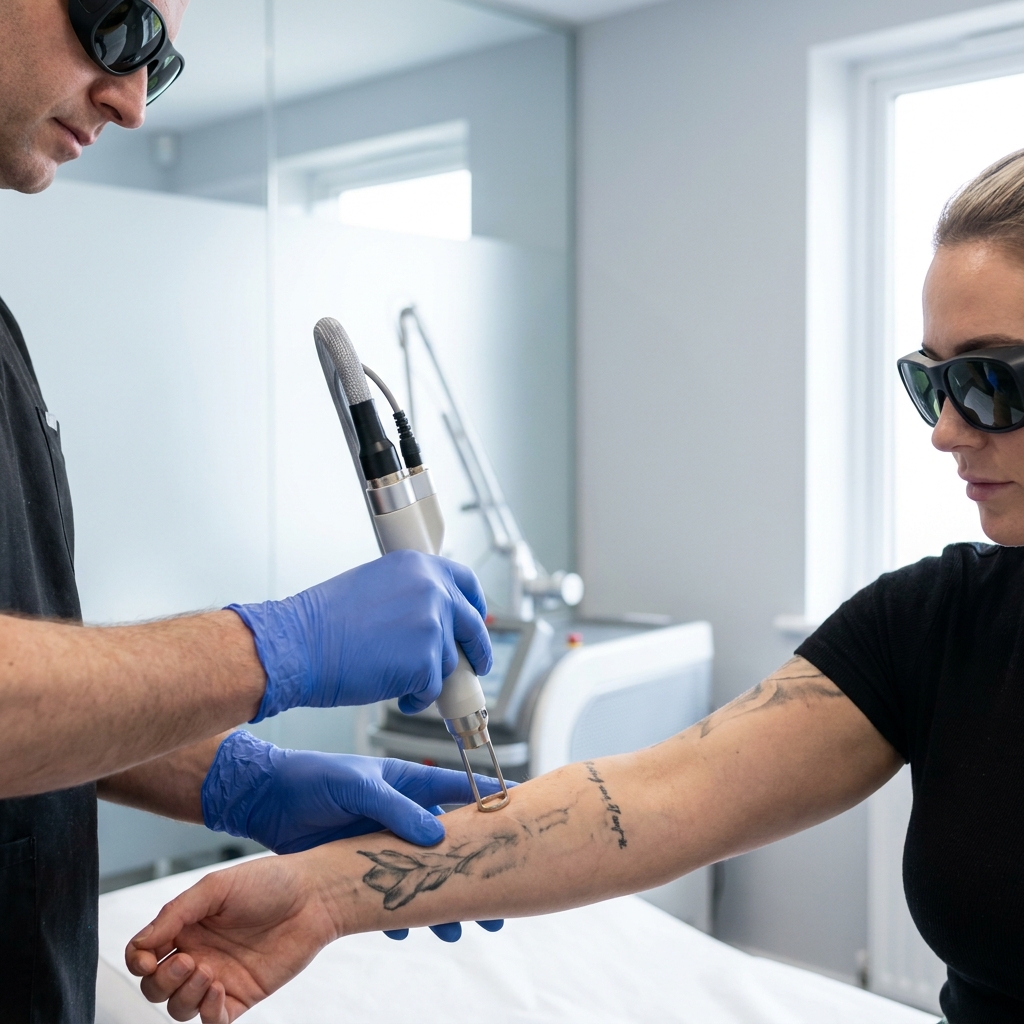
For a single laser tattoo removal appointment, most UK clinics charge somewhere between £50 and £200. The dominant factor is the size of the tattoo being treated: a small symbol might sit at the £50–£90 end, while a large piece treated in one sitting can reach £150–£200 or more. Many clinics set a minimum session fee, so even a very small tattoo will usually attract a base charge rather than a token amount. The figure also reflects the clinic’s equipment, location and the practitioner’s training, all of which feed into the price you are quoted.
It is worth remembering that the session is short — often just a few minutes for a small tattoo — so you are paying for expertise, equipment and the safe delivery of treatment, not for time at the chair. A very brief appointment can still carry a meaningful fee because the cost reflects the laser technology, the practitioner’s training and the clinic’s regulatory overheads rather than the minutes involved.
How clinics price a session
There are three common pricing models, and it is worth knowing which one a clinic uses before you book, because they make quotes hard to compare:
- Flat fee per tattoo — a single price per session regardless of exact timing, banded loosely by size. Simple and predictable.
- By area — priced according to the dimensions of the tattoo, sometimes in defined size bands, so a larger piece costs proportionally more.
- Per minute or per shot — you pay for the treatment time or the number of laser pulses used, which can suit very small areas but adds up quickly on large ones.
None of these is inherently better or worse, but they mean two clinics can quote wildly different single-session figures for the same tattoo. The only fair comparison is the likely full-course total — not the headline session figure — which is what you should budget against; see tattoo removal cost.
| Tattoo size | Indicative per-session price |
|---|---|
| Coin-sized | £50–£90 |
| Palm-sized | £90–£150 |
| Large / sleeve section | £150–£200+ |
What might not be included
The advertised session price does not always cover everything, so check what is bundled in and what is charged on top:
- The initial consultation and patch test, which some clinics provide free and others charge for separately.
- Numbing cream or cooling during treatment, if offered — see numbing cream.
- Aftercare dressings, ointments or follow-up review appointments.
Asking these questions upfront stops a seemingly cheap session from turning into a more expensive visit once the extras are added. It also tells you something about the clinic: a transparent provider will happily set out exactly what each fee covers, while vague answers about what is and is not included are a reason to look elsewhere. A free or low-cost consultation that includes a patch test is generally a good sign, because it shows the clinic wants to assess your skin properly before committing you to a course.
Per session vs full course
Because removal needs around 6–12 sessions, the running total is what matters, not the price of any one visit. A £60 session over ten visits is £600; a £90 session that achieves the same result in seven visits is £630 — close, and decided largely by how effective and efficient the clinic’s equipment and technique are. A clinic with a slightly higher session fee can work out cheaper overall if it reaches the result in fewer visits. To turn per-session figures into a realistic plan, read how many sessions you need, and for ways to spread the cost see tattoo removal financing. This page is general information, not medical advice; an accurate per-session and total quote depends on a consultation and patch test.
Frequently asked questions
Why do clinics quote so differently per session?
They use different pricing models — flat fee, by area, or per minute — and treat tattoos of different sizes. Always ask for the likely full-course total to compare fairly.
Is the consultation included in the session price?
Sometimes, but not always. Some clinics charge separately for the initial consultation and patch test, so confirm before booking.
Does a higher per-session price mean better results?
Not automatically. What matters is appropriate equipment, a trained practitioner and a registered clinic. A higher price can reflect these, but check rather than assume.
Can I pay session by session?
Many clinics let you pay as you go, while others offer course packages or financing. See our guide on tattoo removal financing for the options and cautions.
Sources & further reading
- NHS — Cosmetic procedures: what to consider and questions to ask before treatment
- MHRA — Guidance on the safe use of lasers and IPL devices
- CIEH — special treatment licensing and premises standards guidance
- JCCP — practitioner registration and patient-facing standards
This guide is general information, not medical advice. A patch test and consultation with a qualified, regulated practitioner are essential before treatment, and results vary by individual. Discuss any skin or health concerns with the practitioner or your GP.