The short answer
Older tattoos usually respond faster because the ink has already begun to fade and break down naturally over the years. A new tattoo has dense, intact pigment and needs more sessions. You should also let a fresh tattoo heal fully — generally several weeks at least — before any laser treatment, so the skin is fully recovered. A practitioner will confirm when a recent tattoo is ready to treat.
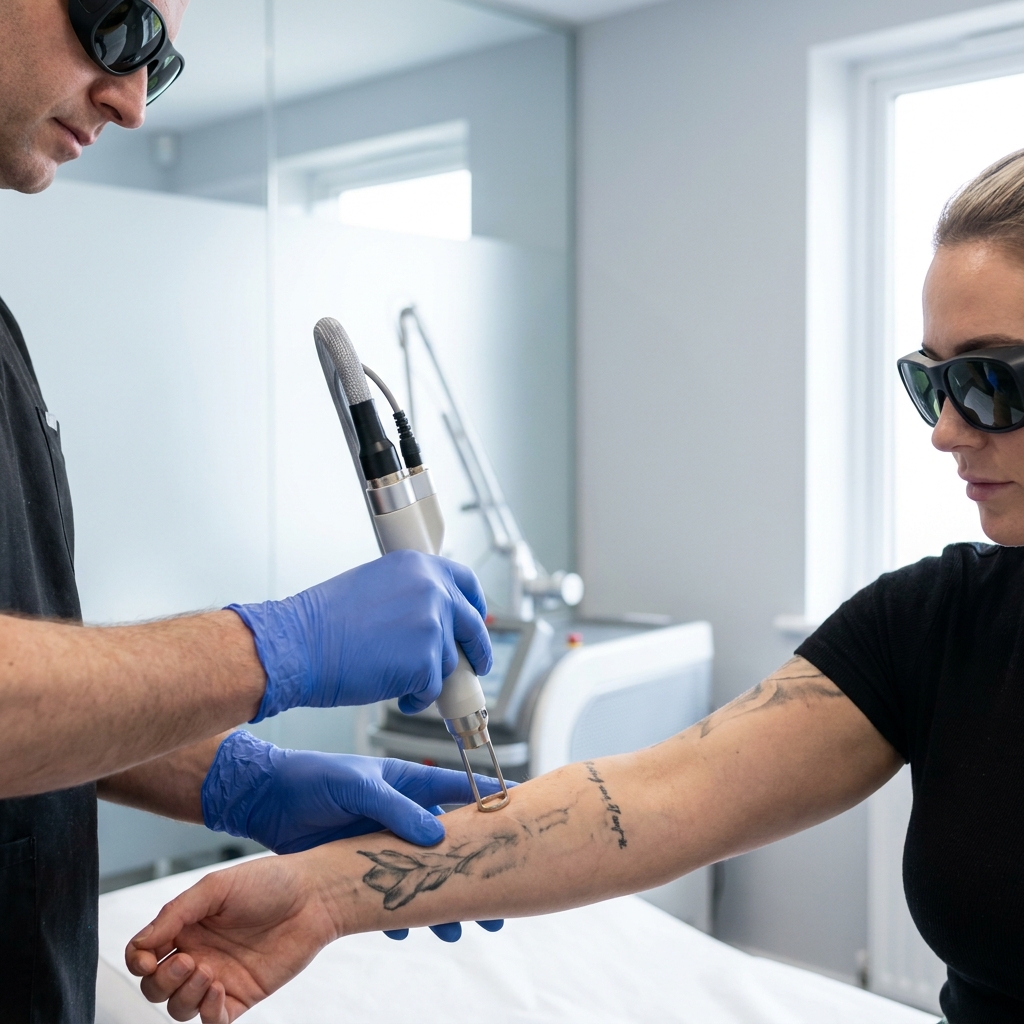
It seems counter-intuitive, but the faded old tattoo on your forearm may clear more easily than the crisp one you got last year. The body is constantly, slowly clearing tattoo pigment, so age gives older ink a head start. This page explains how a tattoo’s age affects removal — and why a brand-new tattoo must heal before any laser touches it.
Tattoo age at a glance
- Older tattoos Often fade faster
- New tattoos Denser ink, more sessions
- Fresh tattoo wait Heal fully first (weeks)
- Why age helps Natural fading already begun
- Confirm timing Ask a practitioner
Why age usually helps
From the moment a tattoo is applied, your immune system treats the pigment as foreign and slowly tries to clear it. That is why tattoos soften and blur over decades. By the time a tattoo is old, some ink has already been broken down and removed, the pigment is less dense, and what remains often sits a little higher in the skin. All of this makes the laser’s job easier, so older tattoos frequently need fewer sessions than you might assume. The natural clearance process is the same one laser treatment relies on — the laser simply accelerates a process your body was already doing slowly. See how tattoo removal works.
Why new tattoos are harder
A recent tattoo is the opposite: dense, fully intact pigment placed deliberately deep in the dermis by a professional, often with crisp, saturated colour. There has been no natural fading, so the laser has more ink to fragment and the body more to clear. That typically means more sessions for a new tattoo than an old one of similar size and colour. People who regret a recent tattoo are sometimes frustrated to learn it may be a harder removal than a decades-old piece, but that is the biology. The session count is discussed on how many sessions.
| Old tattoo | New tattoo | |
|---|---|---|
| Ink density | Reduced by natural fading | Dense and intact |
| Typical sessions | Often fewer | Often more |
| Ready to treat? | Yes, once assessed | Only after full healing |
| Response | Usually faster | Usually slower |
Let a fresh tattoo heal first
If your tattoo is new and you already regret it, do not rush to the laser. The skin must be fully healed before treatment — generally several weeks at minimum — so the area is no longer inflamed and the risk of damage is lower. Lasering broken or healing skin can raise the chance of scarring and poor outcomes. The NHS advises caring for a new tattoo while it heals and watching for signs of infection; a tattoo that is still settling is not ready for laser treatment. A qualified practitioner will inspect the tattoo and confirm when it is safe to begin.
- Wait for full healing — no scabbing, redness or tenderness before starting.
- Expect more sessions — new, dense ink takes longer to clear.
- Have a patch test — essential before any full treatment; see tattoo removal patch test.
- Be patient between sessions — the 6–8 week spacing still applies.
Why regret timing matters
Many people feel tattoo regret quickly, sometimes within days. It is understandable to want it gone at once, but the most sensible path is to wait for the tattoo to heal fully, give yourself time to be sure of the decision, and then book a consultation. There is no advantage to lasering a tattoo while it is fresh — it does not respond faster and the skin is more vulnerable. The wait costs you nothing and protects the result.
Other factors still apply
Age helps, but it does not override everything. A very old tattoo that is dense black or contains stubborn green or yellow ink can still take a full course, and location and your health matter as much as age — covered on factors affecting tattoo removal. An old tattoo on the foot or hand, for instance, may still be slow simply because of poorer blood supply in that area. The only way to know how your particular tattoo will respond is a consultation and patch test, where a practitioner can weigh its age against everything else. This page is general information, not medical advice; individual results vary.
Frequently asked questions
Do old tattoos really come off easier?
Often, yes. Years of natural fading mean the ink is less dense and partly broken down already, so older tattoos commonly need fewer sessions than fresh ones.
How long should I wait to remove a new tattoo?
Until it has fully healed — generally several weeks at least, with no scabbing or redness. A practitioner will inspect it and confirm when treatment can safely begin.
Will a new tattoo take more sessions than an old one?
Usually, because the ink is dense and fully intact with no natural fading yet. Expect more sessions than a comparable older tattoo.
Can a very old, faded tattoo be removed in one session?
No. Even faded tattoos need a course spaced 6–8 weeks apart so the body can clear pigment between visits, though they often need fewer sessions overall.
Sources & further reading
- NHS — Laser and intense pulsed light (IPL) treatments
- NHS — Tattoos: looking after a tattoo and possible problems
- MHRA — Lasers, intense light source systems and LEDs: guidance
- NHS — Cosmetic procedures: things to consider before you go ahead
This guide is general information, not medical advice. A patch test and consultation with a qualified, regulated practitioner are essential before treatment, and results vary by individual. Discuss any skin or health concerns with the practitioner or your GP.