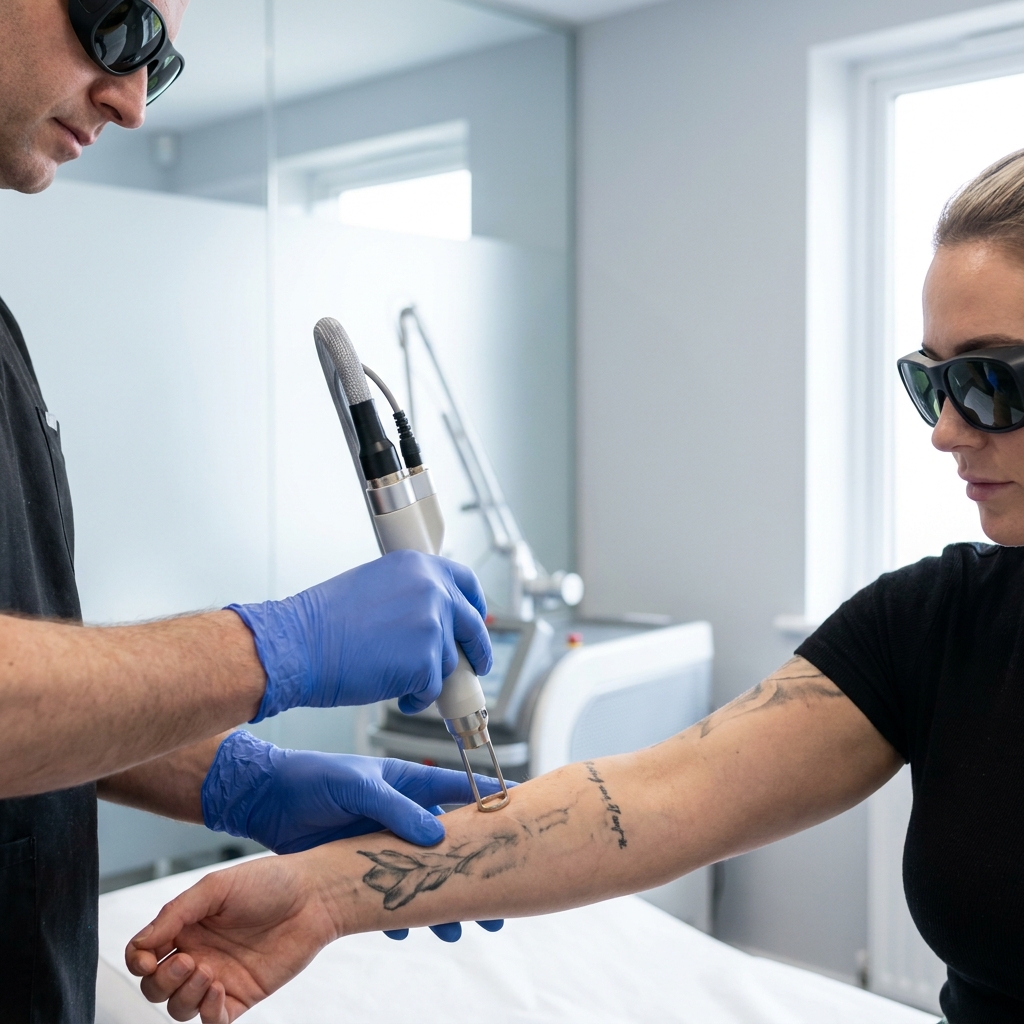
The short answer
Free tattoo removal is rare in the UK. The NHS does not normally fund cosmetic removal, and most people pay privately. Funding may be considered only in rare, exceptional circumstances at the discretion of the local NHS commissioner. Beyond the NHS, a limited number of charitable or specialist schemes exist — for example some supporting people leaving gangs, ex-offenders, or survivors of trafficking — but availability is patchy and eligibility is narrow. Be cautious of ‘free’ offers from clinics.
Searches for free tattoo removal are common, and it is fair to want the honest position rather than false hope. The short answer is that genuinely free removal is uncommon in the UK: the NHS treats it as cosmetic and rarely funds it, and the limited charitable schemes that exist are narrow in scope. This page sets out what really is available and how to avoid being misled.
Free removal at a glance
- NHS funding Not normally available
- NHS exceptions Rare, case-by-case
- Decided by Local NHS commissioner
- Charitable schemes Limited, narrow eligibility
- Most people Pay privately
- Watch for ‘Free’ clinic offers
The NHS position
The NHS regards tattoo removal as a cosmetic procedure and does not normally fund it. Funding is only ever considered in rare, exceptional circumstances — for example where a tattoo causes significant psychological distress, or where it is medically relevant — and any such decision rests with the local NHS commissioner following a clinical assessment, usually beginning with a GP referral. Because commissioning policies differ between areas and decisions are made case by case, there is no general NHS route to free cosmetic removal. You should not plan on the basis that it will be available, and waiting on a slim chance of funding can simply delay treatment.
This is the same position reflected in our wider cost guide: removal is overwhelmingly a private, self-funded procedure, and the great majority of people will pay for it themselves. If a tattoo is genuinely affecting your mental health, it is still worth raising with your GP, who can assess whether any exceptional route might apply — but it is sensible to treat that as a long shot rather than a likely source of funding.
Limited charitable and specialist schemes
A small number of schemes outside the NHS offer free or subsidised removal for particular circumstances. These vary over time and by area, funding comes and goes, and eligibility is narrow, but they have historically included support for:
- People leaving gangs, where a visible tattoo poses a risk to their safety.
- Some ex-offender rehabilitation programmes, where a tattoo is a barrier to reintegration or employment.
- Survivors of human trafficking or exploitation, where tattoos were used to mark or brand them.
- Occasional charity, training-clinic or community initiatives offering treatment at reduced or no cost.
If you think you might qualify, a GP, a relevant charity or a specialist support organisation is the right first point of contact, and they can advise on what is currently available in your area. These routes are limited, often have waiting lists, and cannot be relied upon as a general option for anyone who simply dislikes their tattoo. It is also worth being clear with yourself about which category you fall into, because applying to a scheme you are not eligible for only delays the treatment you want.
| Route | Availability |
|---|---|
| NHS cosmetic funding | Rare, exceptional cases only |
| Charitable / specialist schemes | Limited, narrow eligibility |
| Private clinic | The usual route — paid |
If you can’t access a free route
Most people will pay privately, so it helps to budget realistically and explore ways to spread the cost rather than chase a route that may not exist for you. Our financing guide covers pay-as-you-go, course packages and the cautions around finance agreements. For the numbers themselves, see cost per session and small tattoo removal cost, which is the most affordable scenario and where a tight budget stretches furthest. Partial removal or lightening can also reduce the cost if full removal is out of reach.
The honest bottom line
Free tattoo removal in the UK is the exception, not the rule. Don’t assume the NHS will fund it, treat narrow charitable schemes as a possibility rather than a plan, and be sceptical of clinic ‘free’ marketing that may not mean what it appears to. This page is general information, not medical advice; if you believe you may qualify for funded removal because of your specific circumstances, speak to your GP or a relevant support organisation, who can point you to any scheme that applies.
Frequently asked questions
Can I get tattoo removal on the NHS?
Not normally. The NHS treats removal as cosmetic and funds it only in rare, exceptional circumstances, decided case by case by the local NHS commissioner after a clinical assessment, usually via a GP.
Are there any free tattoo removal schemes in the UK?
A few limited charitable and specialist schemes exist for specific circumstances, such as people leaving gangs, some ex-offenders, or survivors of trafficking. Eligibility is narrow and availability varies.
Why do some clinics advertise free removal?
‘Free’ offers may involve trainees, older equipment, or just a single session of a long course. Check the practitioner’s qualifications and the clinic’s regulatory registration before accepting.
How do I find out if I qualify for funded removal?
Speak to your GP or a relevant charity or support organisation. They can advise on any NHS exceptional-funding route or specialist scheme that might apply to your circumstances.
Sources & further reading
- NHS — Cosmetic procedures: what the NHS does and does not fund
- NHS — Tattoos, removal and skin: general patient information
- MHRA — Guidance on lasers and IPL providers and standards
- JCCP — choosing a qualified, registered cosmetic practitioner
This guide is general information, not medical advice. A patch test and consultation with a qualified, regulated practitioner are essential before treatment, and results vary by individual. Discuss any skin or health concerns with the practitioner or your GP.